Shipping from China to Amazon FBA 2026 Complete Guide
Shipping from China to Amazon FBA? Learn how Amazon sellers move inventory from China factories to US fulfillment centers with the right freight methods, FBA preparation, new import tariff requirements, inventory strategies, and reliable logistics partners.
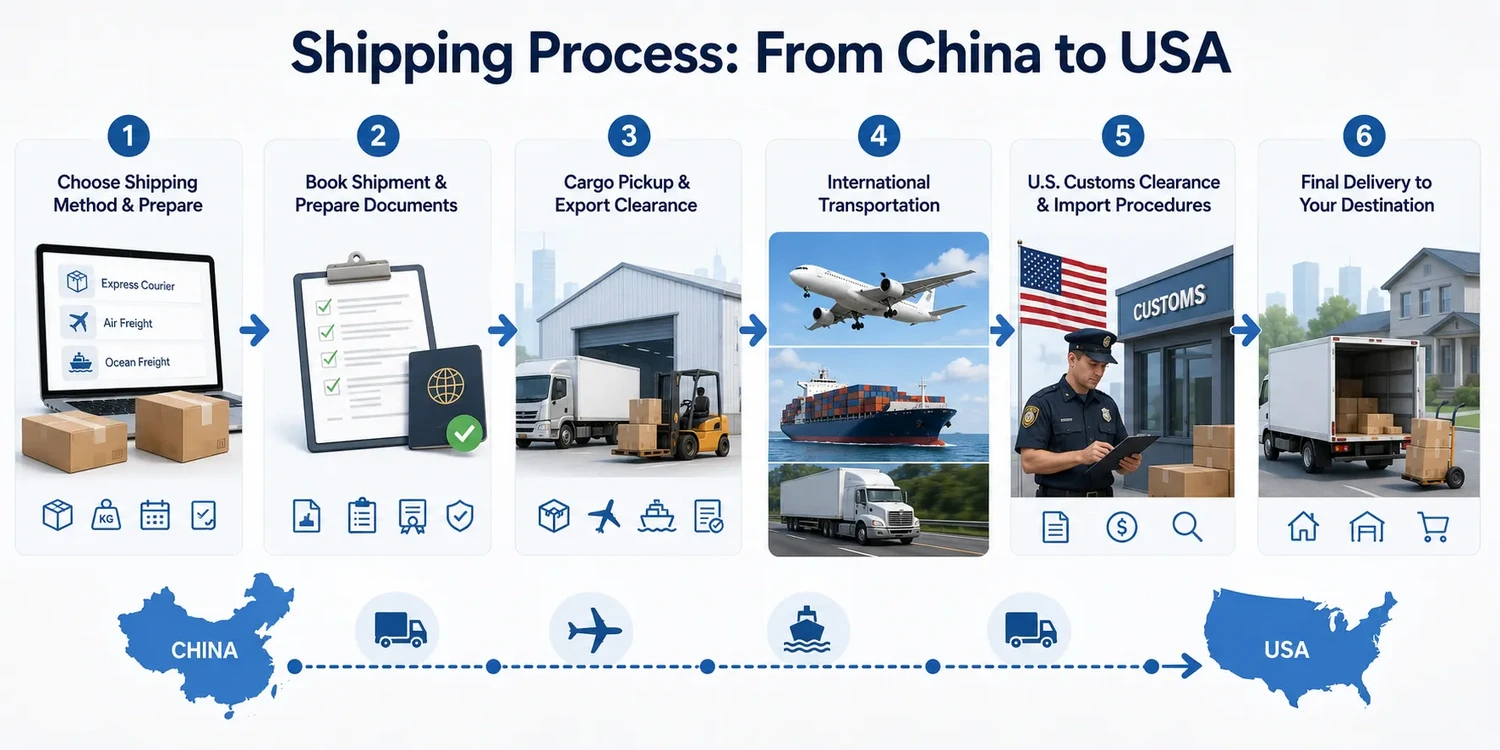
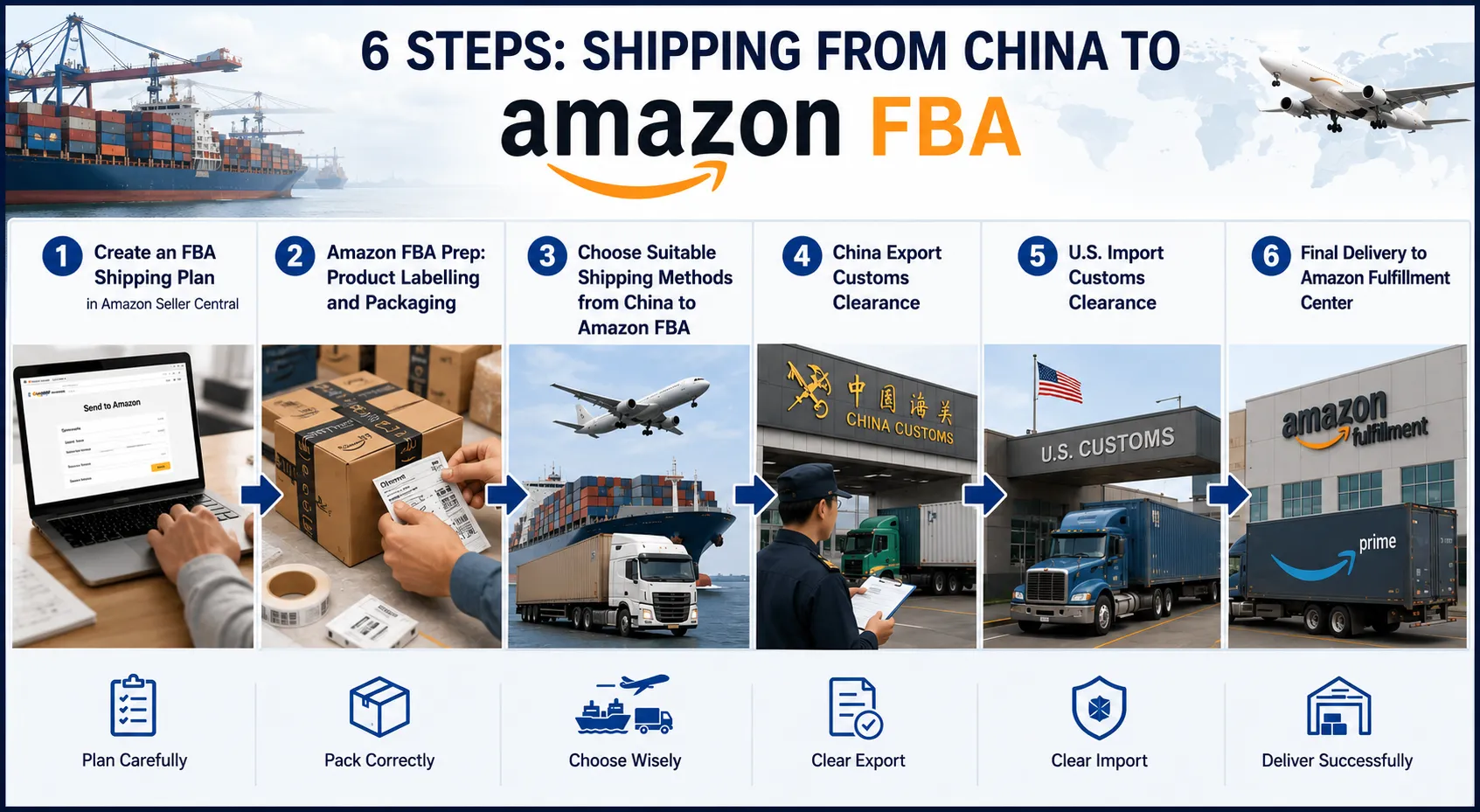
Complete Process of Shipping from China to Amazon FBA USA

Step 1: Create an FBA Shipping Plan in Amazon Seller Central
| No. | Steps | Things to Notice |
|---|---|---|
| 1. | Log in to Amazon Seller Central and select the products (SKUs) you want to send to Amazon FBA | Confirm product information accuracy to avoid receiving issues and unexpected fees |
| 2. | Enter the Ship-From Location | The ship-from location can affect Amazon’s inbound routing and assigned fulfillment center. |
| 3. | Specify how products are packed and enter carton information | Incorrect carton dimensions or weight can lead to shipment discrepancies, additional fees, or delivery delays. Avoid changing packaging details after creating the shipment plan. |
| 4 | Choose shipping mode Small Parcel Delivery (SPD) or Less than Truckload (LTL/FTL) and input carrier details | SPD: suitable for samples, small shipments, and urgent replenishment. LTL/FTL: better for large-volume inventory, ocean freight shipments, and palletized cargo |
| 5 | Specify inbound shipment option Minimal Shipment Split: send inventory to fewer locations for a placement fee; Amazon-Optimized Shipment Split: send inventory to multiple fulfillment centers with no placement fee | Compare placement fees with U.S. domestic trucking costs and delivery complexity |
| 6 | Confirm shipping plan and print FNSKU labels and box labels | Labels must be correctly applied. |
Step 2 Amazon FBA Prep: Product Labelling and Packaging
Key Amazon FBA Labeling Requirements
- FNSKU labels must completely cover existing UPC/EAN barcodes to avoid Amazon scanning errors.
- Place labels on a flat surface and avoid corners, curved areas, or package seams.
- Labels must be clear, complete, and easily scannable and avoid blurry printing, broken barcode lines, and smudges.
- Adding “Sold as set” label for bundled products
- Displaying expiration dates in the required MM-DD-YYYY format for applicable products
- Adding suffocation warnings for poly bags with openings of 5 inches or larger
- Country-of-origin marking “Made in China“
Amazon FBA Shipping Box Compliance Requirements
| Requirement | |
|---|---|
| Box Weight | Each box should not exceed 50 lb (22.5 kg). |
| Single item Weight | For boxes that contain a single item weighing over 50 lb require a “Team Lift” label. For boxes that contain a single item weighing over 100 lb require a “Mechanical Lift” label. |
| Box Size | The longest side of each box should generally be ≤ 25 inches (63.5 cm). |
| Box Labels | It is recommended to place labels on at least two different sides of each box to improve barcode visibility and reduce receiving issues. Make sure box labels exactly match the shipment plan created in Seller Central. |
Amazon FBA Pallet Preparation Requirements
| Requirement | |
|---|---|
| Pallet Size | Use standard GMA wooden pallets (40 × 48 inches / 1.0 × 1.2 meters). |
| Pallet Height | Total pallet height, including the pallet itself, should generally not exceed 72 inches (1.83 meters). |
| Pallet Weight | Total pallet weight should not exceed 1,500 lb (680 kg). |
| Pallet Wrapping & Stability | Secure cartons with stretch wrap to prevent movement during transportation. Cartons should not extend beyond the pallet edges or hang over the sides. |
| Pallet Labeling | Apply pallet labels on all four sides and ensure shipment information is clearly visible for Amazon receiving. |
Step 3 Choose Suitable Shipping Methods from China to Amazon FBA
Common shipping methods to Amazon FBA
| Shipping Method | Transit Time | Best For |
|---|---|---|
| Express Courier | 2–5 days | • Product samples • Small shipments • Emergency restocking |
| Air Freight | 3–7 days | • Urgent inventory replenishment • New product launches • High-value products |
| Fast Ocean Freight (such as Matson and ZIM) |
10–14 days | • Peak season inventory replenishment • Sellers who need a balance between speed and cost |
| Standard Ocean Freight | 22–45 days | • Large-volume inventory • Regular FBA replenishment • Cost-sensitive sellers |
Matson vs. ZIM: Fast Ocean Shipping Options from China to Amazon FBA Compared
| Comparison Factor | Matson CLX / CLX+ | ZIM |
|---|---|---|
| Core Advantage | Best-in-class schedule reliability and fastest transit consistency | Strong balance between transit speed and shipping cost |
| Main Origin Ports in China | Shanghai, Ningbo | Shenzhen (Yantian), Shanghai, Ningbo |
| U.S. Destination Port / Terminal | Long Beach C60 Terminal (dedicated private terminal) | Los Angeles APM Terminals (public terminal) |
| Ocean Transit Time | Approximately 11–12 days (Shanghai → Long Beach) | Approximately 12–14 days (Yantian/Shanghai → Los Angeles) |
| Estimated Total Delivery Time to Amazon Warehouse | Approximately 15–21 days | Approximately 20–25 days |
| Terminal Efficiency & Congestion Risk | Very Low — Dedicated C60 terminal enables faster container availability and more stable operations during peak seasons | Moderate — Public terminal operations may experience congestion during peak periods, potentially causing additional waiting time |
| Cost Position | Premium ocean service with higher reliability | More cost-effective option with strong speed-to-cost ratio |
Step 4 China Export Customs Clearance
Common documents needed:
- Commercial Invoice
- Packing List
- Bill of Lading / Air Waybill
- Certificate of Origin
- ISF Filing (Ocean Freight)
- Product Compliance Certification
Step 5 U.S. Import Customs Clearance
- Conduct import entry
- Pay duty and tariff
- Handle customs inspections if required
Step 6 Final Delivery to Amazon Fulfillment Center
Amazon FBA Final Delivery: LTL/FTL vs. Small Parcel Delivery (SPD)
| Comparison Factor | LTL/FTL Freight Delivery | Small Parcel Delivery (SPD) |
|---|---|---|
| Appointment Requirement | The carrier must schedule a delivery appointment through Amazon’s CARP. | No appointment required. |
| Typical Transit Time (U.S. Warehouse → Amazon FC) | Usually 1–3 business days | Usually 1–2 business days |
| Best For | Palletized shipments, ocean freight cargo, large-volume inventory | Small cartons, product samples, small replenishment shipments, and lightweight inventory |
| Packaging Requirements | Requires Amazon-compliant pallet preparation and pallet labels | Requires compliant shipping boxes with correct labels |
| Peak Season Risks | Appointment slots can become limited during peak seasons. | Volume surges may lead to carrier delays. |
Amazon FBA Fulfillment Center Locations & Optimal Shipping Routes from China
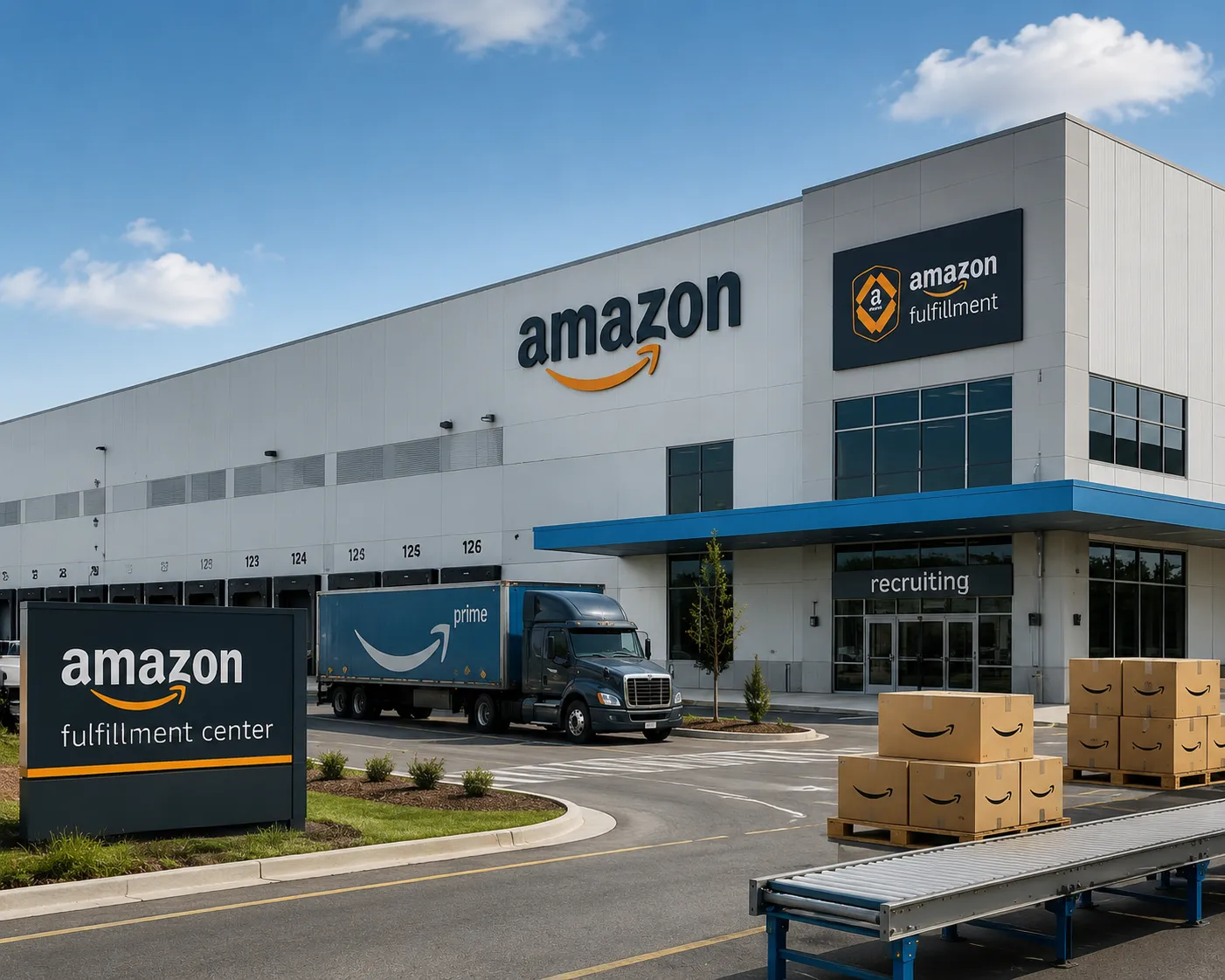
As of 2026, Amazon operates more than 175 fulfillment and sorting facilities across the United States. Choosing the right shipping route and port can significantly affect transportation costs, delivery speed, and inventory availability.
How Amazon FBA Assign Fulfillment Centers
When you create an inbound shipment in Amazon Seller Central, Amazon determines where your inventory should be delivered based on factors such as:
- Product category
- Customer demand patterns
- Current fulfillment network capacity
- Inventory distribution needs
A shipment plan may be assigned to one or multiple Amazon fulfillment centers depending on Amazon’s inventory allocation strategy.
U.S. West Coast vs. East Coast Ports for Amazon FBA Imports
Choosing between West Coast and East Coast ports can significantly affect:
- Ocean transit time
- Inland trucking costs
- Total landed cost
- Delivery reliability during peak seasons
The best option depends on your supplier location, the distribution of your customers, assigned FBA fulfillment centers, and current port conditions.
1. Los Angeles / Long Beach Port (West Coast)
Best for FCs located in: - California
- Nevada
- Arizona
- Washington
- Western US FBA fulfillment centers
Key advantages: - Largest US gateway for Asia imports
- Extensive direct services from China
- Strong trucking network to Western states
Considerations: - Heavy import volume during peak seasons
- Q4 congestion may add several days to delivery schedules
2. Savannah / Charleston Ports (East Coast Southeast)
Best for FCs located in:
- Georgia
- Florida
- North Carolina
- South Carolina
- Tennessee
- Southeast US fulfillment centers
Key advantages:
- Strong growth in Asia import services
- Increasing container capacity
- Often less congestion compared with West Coast gateways
Considerations:
- Longer ocean transit compared with West Coast routes
- Requires careful inventory planning
3. New York / New Jersey Port (Northeast Gateway)
Best for FCs located in:
- New Jersey
- Pennsylvania
- New York
- Connecticut
- Massachusetts
- Northeast FBA fulfillment centers
Key advantages:
- Major gateway for Northeast distribution
- Strong LCL consolidation infrastructure
- Convenient access to large consumer markets
Considerations:
- Higher terminal and handling costs
How Amazon Sellers Should Choose the Best FBA Shipping Route
1. Follow Your Customer Demand and Sales Data
The ideal FBA inventory location should match where your customers are located.Before choosing a shipping route, review your sales data in Amazon Seller Central.
- If 60%+ of your orders come from the Eastern U.S., prioritize sending inventory closer to East Coast fulfillment centers.
- If sales are distributed relatively evenly across the U.S., consider central fulfillment locations such as Chicago and Dallas as these locations provide better nationwide coverage and may reduce average domestic delivery distance.
2. Avoid Relying on A Single Route or Fulfillment Center During Peak Season
During peak season, some ports and Amazon FCs may experience congestion.
- Monitor FBA fulfillment center capacity during peak season and avoid high-volume FCs such as ONT8, LGB8, and LAX9
- Splitting inventory across multiple Amazon FCs to reduce the risk of delayed availability
3. Optimize Based on Total Landed Cost
The cheapest ocean freight rate does not always create the lowest overall cost.
A route with lower ocean freight may become more expensive after considering:
- Longer trucking distance to Amazon FC
- Higher port handling fees
- Additional warehouse transfers
- Longer inventory holding time
Amazon sellers should evaluate the complete landed cost:
Landed Cost = Product Cost + International Freight + Customs Duties + Port Fees + Inland Transportation + Potential Transfer Costs
How to Plan Amazon FBA Inventory: Replenishment Strategies and Seasonal Inventory Planning
Effective inventory planning is essential for Amazon FBA sellers to maintain sales momentum, avoid stockouts, and control logistics costs.
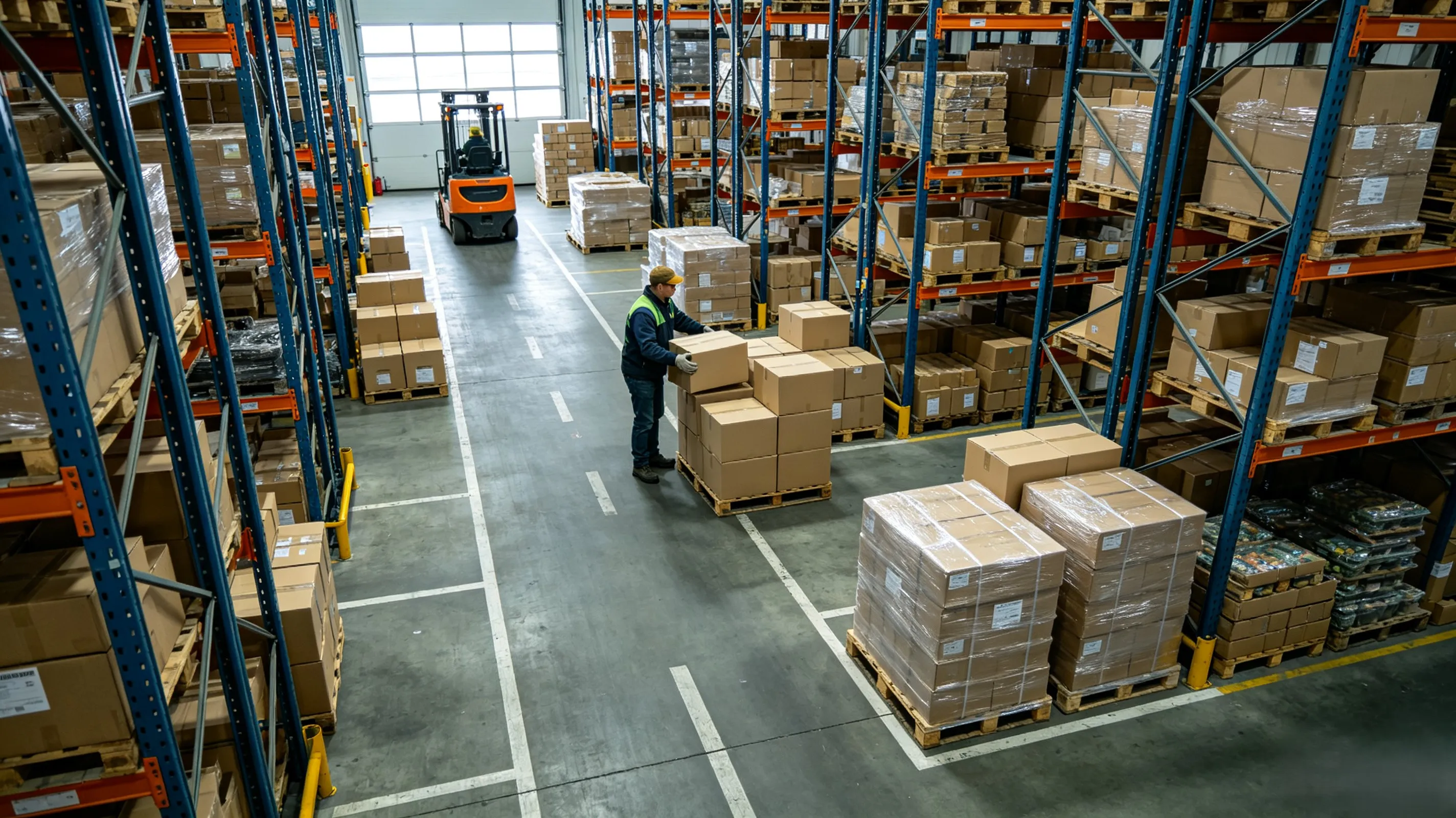
Amazon FBA Inventory Replenishment Strategy: Balancing Cost and Speed
Keeping enough inventory in Amazon FBA is one of the biggest challenges for sellers.
A common approach is to use a combination of ocean freight and air freight:
Ocean freight for regular inventory replenishment:
Most inventory is shipped by ocean freight because it offers the lowest cost per unit and is ideal for planned restocking of products with stable demand.
Air freight or express shipping for urgent needs:
A smaller portion of inventory is shipped by air freight or express when sellers need faster delivery, such as during new product launches, unexpected sales increases, or potential stock shortages.
Many experienced sellers use a strategy where approximately 70–80% of inventory moves by ocean freight and 20–30% by air freight or express, adjusting the ratio based on sales performance, product type, and market demand.
Amazon FBA Seasonal Inventory Planning
Amazon sales demand changes significantly throughout the year. Successful sellers prepare inventory 2–3 months before major sales events to avoid transportation delays, higher freight rates, and Amazon receiving congestion.
| Sales Event | Typical Period | Recommended Shipping Time | Logistics Considerations |
|---|---|---|---|
| Prime Day | July | Ship by early May (West Coast) / mid-April (East Coast) | June–July is one of the busiest freight periods. Ocean capacity becomes tighter, so reserve space 2–4 weeks earlier. |
| Back-to-School Season | August–September | Ship by early June | Demand increases for stationery, electronics, and school-related products. |
| Black Friday & Cyber Monday | Late November | Ship by late August–early September | September–October is the peak logistics season. Freight rates increase and warehouse capacity becomes limited. |
| Christmas Season | December | Ship by late September–early October | Inventory arriving in November may not reach customers in time due to FBA receiving delays and holiday congestion. |
| New Year | January | Ship by early November | Post-holiday shipping rates often decrease, making it a good period to prepare inventory at lower transportation costs. |
How 2026 U.S. Import Policy Changes Impact Amazon FBA Sellers
1. De Minimis Exemption Eliminated: Small Shipments Now Face Customs Duties
Previously, shipments valued under $800 could enter the U.S. duty-free under the de minimis exemption. Many sellers previously used small parcel shipments or split shipments to reduce upfront import costs. Under the new rules:
- Small replenishment shipments may now incur duties and customs fees.
- Shipping strategy becomes more important — frequent small shipments may become less economical compared with consolidated ocean shipments.
2. New Section 301 Forced Labor Tariffs Add Additional Import Costs for Amazon Sellers
On July 24, 2026, a new Section 301 tariff measure that adds an additional 12.5% tariff on certain imports from China took effect, replacing the temporary 10% Section 122 tariff that expired on the same day. This change creates additional cost pressure for businesses importing from China.
Under the new rules:
- Higher product costs before inventory reaches Amazon FBA
- Lower profit margins for low-price products
- Increased difficulty competing through price alone
- Greater importance of accurate landed cost calculations
3. Customs Bond Requirements Become More Important for Regular Amazon Importers
With more shipments requiring formal customs entry and increased duty obligations, many frequent Amazon importers need to review their customs bond strategy.
As import values and tariff obligations increase:
- Existing bonds may no longer provide sufficient coverage.
- Continuous bonds may become more practical for sellers importing regularly.
How Amazon Sellers Can Adapt to Rising Import Costs and New Customs Requirements
1. Conduct a Full SKU Profitability Audit
Amazon sellers should review every SKU:
Keep and scale products with:
- Strong customer demand
- High profit margins
- Differentiated value
Pause or remove products with: - High tariff exposure
- Weak differentiation
- Low-ticket products with limited margin after fees
2. Consolidate Supplier Shipments Through a China Warehouse
- Consolidate multiple supplier shipments through a China warehouse
- Avoid frequent small shipments with higher fixed customs costs
- Build more accurate demand forecasting
3. Stop Competing Only Through Low Prices
A product with stronger differentiation has more pricing flexibility and can better absorb higher import costs.
Successful sellers should focus on:
- Private label development
- Product differentiation
- Higher perceived value
4. Calculate True Landed Cost Before Ordering Inventory
Amazon sellers should include:
- Product cost
- International freight
- Latest U.S. customs duties and tariff costs
- Port and inland transportation costs
This helps sellers accurately evaluate profitability before importing.
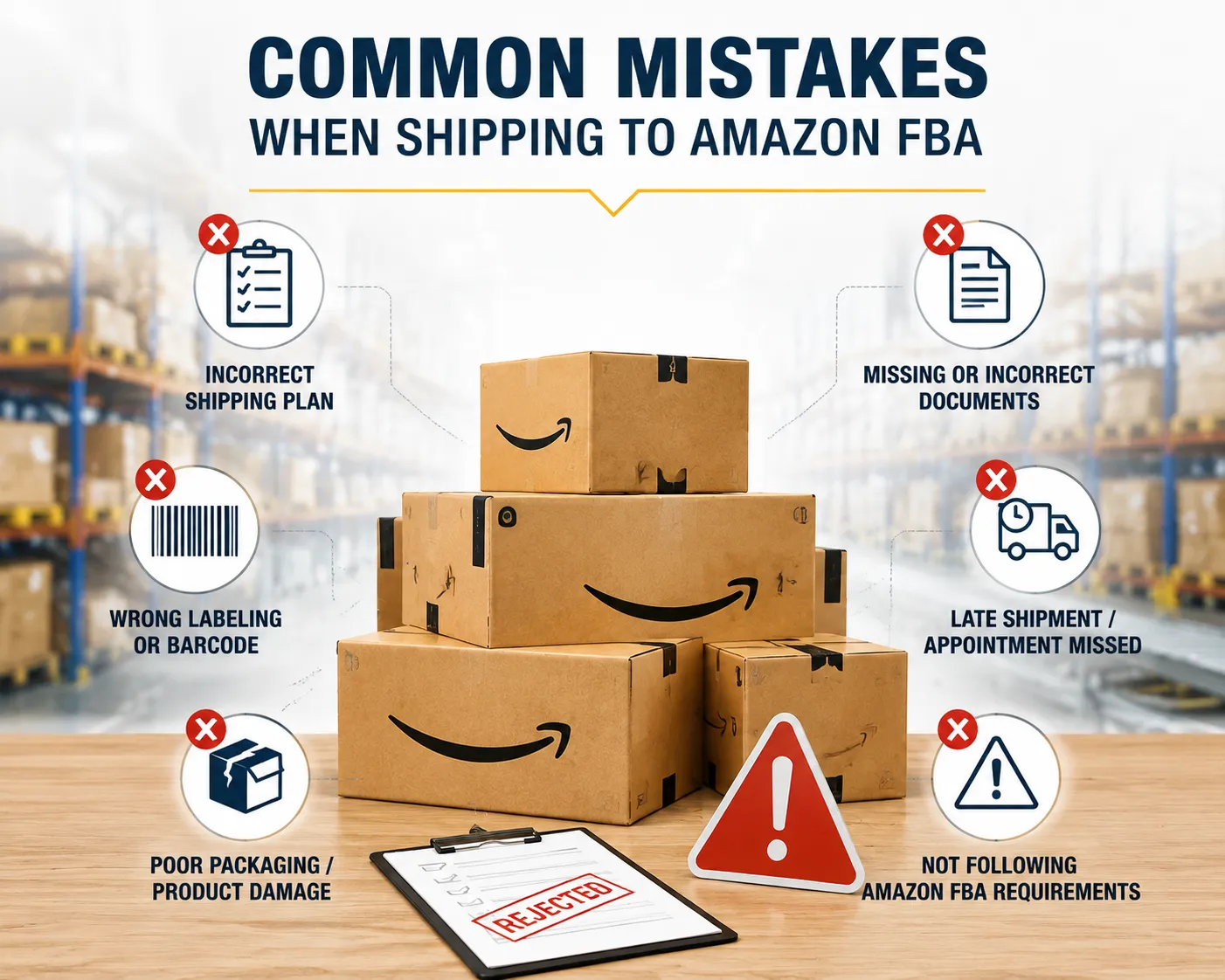
Common Mistakes When Shipping from China to Amazon FBA
Shipping inventory from China to Amazon FBA involves more than arranging transportation. Many sellers face delays, extra costs, or Amazon receiving issues because of mistakes in FBA preparation, labeling, customs documentation, and shipment planning.
1. Incorrect FBA Labeling and Product Preparation
Common mistakes include:
- Applying the wrong FNSKU labels or labeling the wrong SKU.
- Leaving manufacturer barcodes visible when Amazon requires FNSKU labels.
- Using damaged or unscannable barcode labels
- Missing required poly bags, suffocation warnings, bubble wrapping, or protective packaging.
How to avoid it:
- Before shipment, confirm Amazon FBA prep requirements for each product and conduct a final inspection. A professional FBA prep team can handle labeling, bundling, poly bagging, carton preparation, and quality checks to ensure inventory is Amazon-ready.
- Work with ContainerFromChina who provides FBA prep services in China, including FNSKU labeling, product inspection, packaging, and compliance checks before shipment to reduce Amazon receiving issues
2. Incorrect Carton Information and Shipment Measurements
Common mistakes include:
- Providing estimated carton dimensions instead of actual measurements.
- Exceeding Amazon’s carton weight limits.
- Mismatching carton labels with actual carton contents.
How to avoid it:
- Measure cartons after final packing.
- Verify carton quantity, dimensions, and weight before creating the shipment.
- Work with ContainerFromChina who helps verify carton details through warehouse inspections and shipment checks, ensuring accurate measurements and reducing delays caused by incorrect FBA shipment information.
3. Creating an Incorrect Amazon Shipping Plan
Common mistakes include:
- Shipment quantity does not match the Amazon shipment plan.
- Sending inventory to the wrong Amazon fulfillment center.
- Selecting the wrong shipment type (SPD, LTL, or FTL).
- Missing Amazon delivery appointments.
- Shipping products before Amazon approves the shipment plan.
How to avoid:
- Create the FBA shipment plan before goods are packed.
- Match carton quantities, weights, and dimensions with the actual shipment.
- Work with ContainerFromChina who assists sellers with FBA shipment coordination, including carton verification, shipping method selection, and delivery arrangements to ensure smooth transportation to Amazon fulfillment centers.
4. Incorrect Customs Documentation
Common mistakes include:
- Wrong HS code classification.
- Incorrect commercial invoice information.
- Lack of required certificates for regulated products.
- Shipping restricted products without proper documentation.
How to avoid:
- Confirm HS codes before shipment.
- Review import requirements before goods leave China.
- Work with ContainerFromChina who supports China export and U.S. import customs procedures, helping sellers prepare shipping documents, review compliance requirements, and reduce customs clearance risks.
5. Underestimating Amazon Receiving Time
Common mistakes include:
- Not accounting for Amazon warehouse check-in delays.
- Planning inventory based only on ocean transit time.
- Running out of stock while inventory is still waiting to be received.
How to avoid it:
- Include Amazon receiving time in your inventory planning.
- Maintain sufficient safety stock and plan shipments based on sales forecasts.
- During peak seasons, allow additional time for production, ocean transit, customs clearance, and Amazon receiving.
- Work with ContainerFromChina who helps Amazon sellers plan reliable shipping schedules with ocean, air, and express options, allowing better inventory control and reducing the risk of stockouts caused by unexpected delays.
Top Amazon FBA Freight Forwarders
Key Qualities to Look for in an Amazon FBA Freight Forwarder
Choosing the right FBA freight forwarder can directly impact your inventory availability, shipping costs, and Amazon account performance. A reliable partner should understand Amazon’s requirements and efficiently manage the entire supply chain from factory pickup to FBA delivery.
1. Proven Amazon FBA Experience
An experienced FBA freight forwarder understands Amazon’s strict requirements, including shipment plans, labeling rules, carton requirements, delivery appointments, and fulfillment center procedures. This helps prevent costly delays, relabeling fees, and rejected shipments.
2. Comprehensive FBA Prep Services
A capable FBA partner should offer pre-shipment services such as:
- FNSKU labeling
- Product inspection
- Poly bagging and bundling
- Carton preparation
- Palletizing
- Shipment consolidation
Handling these steps before goods leave China reduces compliance risks and ensures inventory arrives Amazon-ready.
3. Strong China–US Logistics Capability
Since most Amazon sellers source from China, a reliable forwarder should have strong origin-side support, including:
- Supplier pickup coordination
- China warehouse receiving and consolidation
- Ocean FCL/LCL shipping
- Air freight options
- Export documentation support
Strong China-side operations help reduce delays and improve shipment control.
4. Customs Clearance and Compliance Expertise
International shipments can face delays due to incorrect documentation or customs issues. A qualified FBA freight forwarder should understand:
- HS code classification
- Commercial invoice requirements
- Import duties and tariffs
- Product compliance requirements
- U.S. customs procedures
This is especially important for regulated products such as electronics, batteries, and cosmetics.
5. Flexible Shipping Solutions
Amazon sellers have different inventory needs. A good freight forwarder should provide multiple shipping options:
- Ocean freight: Best for cost-effective, large-volume replenishment.
- Air freight: Suitable for urgent restocking and new product launches.
- Express shipping: Ideal for small, time-sensitive shipments.
The ability to combine different transportation methods helps sellers balance cost and speed.
6. Transparent Pricing and Shipment Visibility
Unexpected fees can quickly reduce profit margins. A professional FBA freight forwarder should provide:
- Clear quotations
- Detailed cost breakdowns
- Shipment tracking
- Regular status updates
- Dedicated customer support
Transparency allows sellers to accurately calculate landed costs and plan inventory.
List of Top FBA Freight Forwarders
| Freight Forwarder | Website | Key Strengths for Amazon FBA Shipping |
|---|---|---|
| ContainerFromChina | containerfromchina.com | • End-to-end China–US FBA shipping with FBA prep services, including labeling, inspection, palletizing, and delivery to Amazon fulfillment centers • Strong China–US logistics capabilities with ocean FCL/LCL, air freight, customs clearance, and warehouse support |
| Freightos | freightos.com | • Digital freight marketplace for comparing and booking multiple ocean and air freight options • Transparent pricing tools and shipment tracking for easier logistics management |
| Guided Imports | guidedimports.com | • Specialized in Amazon FBA freight forwarding and prep services • Supplier consolidation, inspections, and China-to-US logistics support for ecommerce sellers |
| Unicargo | unicargo.com | • Flexible air and ocean freight solutions for ecommerce and Amazon sellers • Door-to-door shipping with customs clearance and shipment visibility |
| AEB Logistics | aeblogistics.com | • China-to-US FBA shipping with labeling, palletization, and prep support • Full-service logistics from supplier pickup to Amazon fulfillment centers |
| Shapiro | shapiro.com | • Strong customs brokerage and import compliance expertise • Experienced freight forwarding, warehousing, and distribution support for U.S. importers |
Frequently Asked Questions
1. What is the best shipping method from China to Amazon FBA?
The best shipping method depends on your inventory size, urgency, and budget.
- Ocean freight is usually the best choice for regular FBA replenishment and large-volume shipments because it offers the lowest cost per unit.
- Air freight is suitable for urgent restocking, new product launches, and high-value products when speed is more important than cost.
- Express shipping works well for samples, small shipments, or emergency inventory needs.
2.How to label and package products to meet FBA requirements?
- Products should have correct FNSKU labels that fully cover manufacturer barcodes when required, with clear and scannable labels placed on flat surfaces.
- Packaging must follow Amazon FBA requirements, including proper poly bagging, suffocation warnings, bubble wrapping for fragile items, and “Sold as set” labels for bundled products when applicable.
- Sellers should also verify carton dimensions, weight, and box labels before shipment to ensure all inventory matches the Amazon shipment plan.
- Working with an experienced freight forwarder can help complete labeling, packaging, inspection, and compliance checks before goods leave China.
3. How can I avoid delays or extra costs when shipping from China to Amazon FBA?
Most FBA shipping problems come from incorrect preparation, inaccurate shipment information, or customs issues.
Common mistakes include:
- Incorrect FNSKU labeling
- Wrong carton dimensions or weight information
- Creating an incorrect Amazon shipping plan
- Missing customs documents or incorrect HS codes
- Not allowing enough time for Amazon receiving
To avoid these problems, sellers should verify shipment details before departure and work with an experienced FBA freight forwarder that understands Amazon requirements, customs procedures, and delivery processes.
4. How can Amazon sellers protect their profit margins after import tariffs increase?
- Recalculate every SKU based on the new landed cost and consider repricing or discontinuing SKUs that are no longer profitable
- Stop competing only on price
- Consolidate shipments to reduce import costs
5. How do I choose a reliable Amazon FBA freight forwarder?
A reliable FBA freight forwarder should understand Amazon’s entire inbound process from factory pickup to fulfillment center delivery.
Key qualities include:
- Proven Amazon FBA experience
- FBA prep services such as labeling, inspection, and palletizing
- Strong China–US logistics capabilities
- Customs clearance and compliance expertise
- Flexible ocean, air, and express shipping options
- Transparent pricing and shipment tracking