Importing from China to USA: 2026 Complete Guide to Sourcing, Shipping & Customs
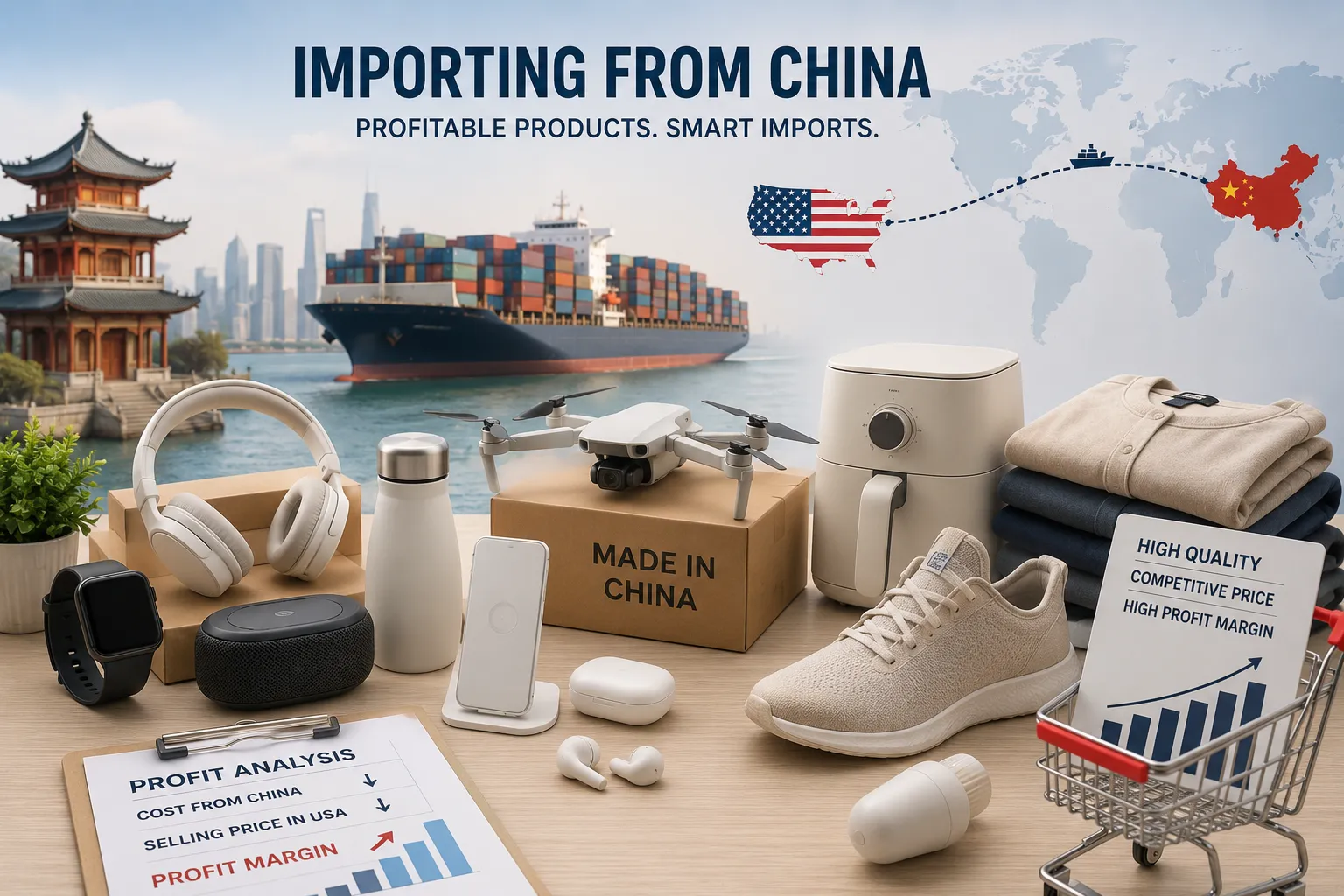
Importing from China offers U.S. businesses unmatched access to profitable products. This complete guide walks you through every step of the China-to-USA import process, from sourcing profitable products and verifying trustworthy suppliers to navigating U.S. customs compliance, choosing the right Incoterms, and selecting a reliable freight forwarder. Whether you’re launching your first Amazon FBA shipment or scaling an established supply chain, learn how to avoid costly pitfalls, protect your margins, and build a resilient importing strategy in 2026.

Profitable Import Opportunities from China
For decades, U.S. businesses have imported products from China because of competitive manufacturing costs. However, the biggest opportunity today is not simply buying cheap products. Successful importers use China as a product development and supply chain advantage.
China allows businesses to:
- Launch customized products without building their own factories
- Access thousands of specialized manufacturers within concentrated industrial clusters
- Test new product ideas through flexible order options
- Move goods efficiently through China’s mature export and logistics network
Private Label Products: Build a Brand Instead of Competing on Price
Why China has a unique advantage
Many countries can manufacture products, but China has one of the world’s largest networks of OEM and ODM manufacturers.
A U.S. business can work with Chinese factories to:
- Modify existing designs
- Add branding
- Customize packaging
- Develop new features
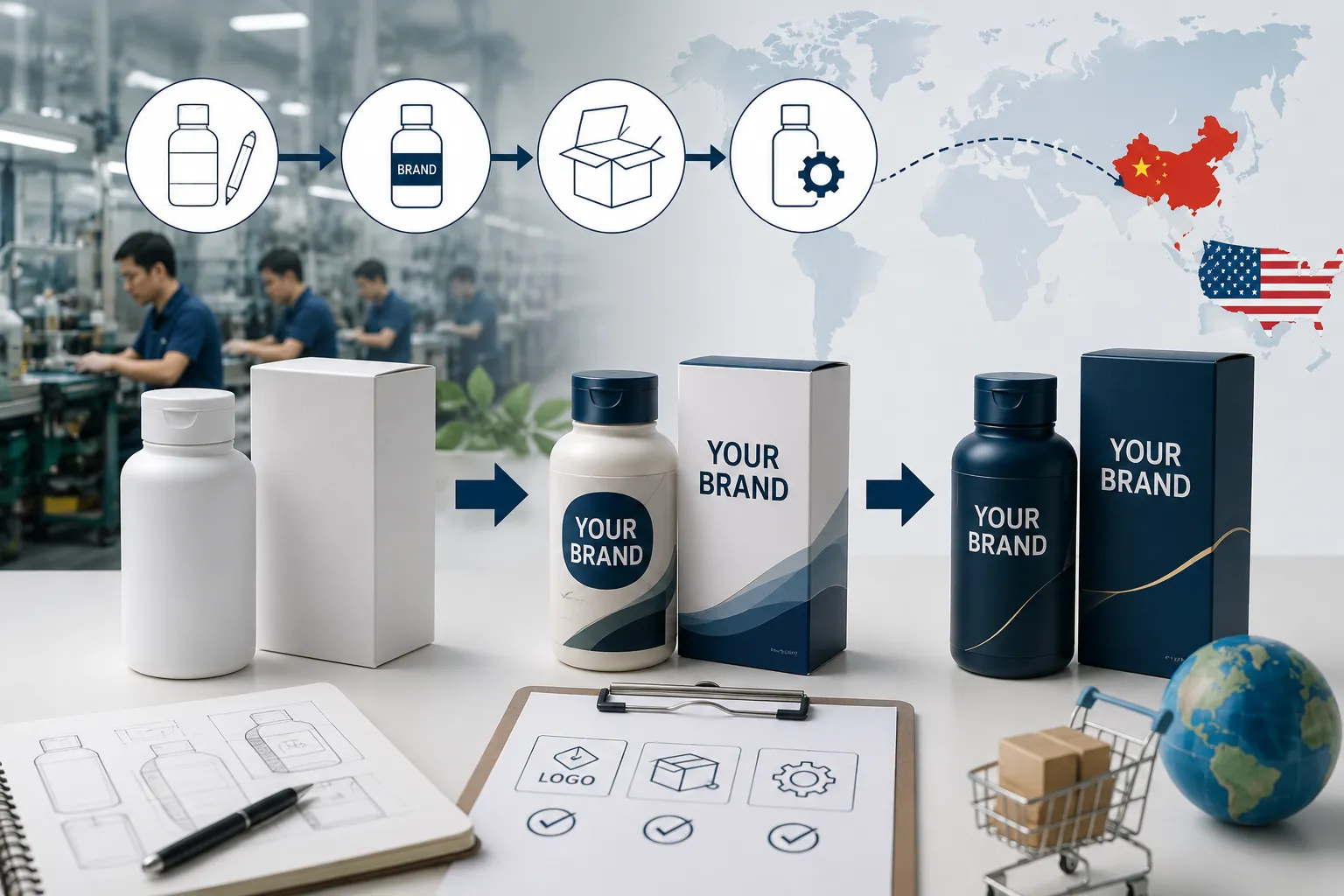
For example:
A company does not need to create a factory to launch a new kitchen product brand. It can:
- Find an experienced Chinese manufacturer
- Customize the product design
- Add unique packaging
- Import under its own brand
Why This Creates Profit Opportunities
❌ Generic Products: Same product, many sellers. Competition is based solely on price, crushing profit margins.
✅ Private-Label Products: Unique product, unique brand. Value is built through differentiation, not discounting.
| Metric | Generic Product | Private-Labeled Product | Difference / Advantage |
|---|---|---|---|
| Factory Price (COGS) | $3 | $4 | +$1 (+33% cost increase) |
| Market Price (Retail) | $8 – $10 | $18 – $25 | +$10 – $15 premium |
| Gross Margin ( $ ) | $5 – $7 | $14 – $21 | +$9 – $14 per unit |
| Gross Margin (%) | ~63% – 70% | ~78% – 84% | +15–20 percentage points |
| Markup Multiplier | 2.7x – 3.3x | 4.5x – 6.25x | Significantly higher pricing power |
Electronics and Smart Products: Benefit from China’s Complete Supply Chain
Why China has a unique advantage
One reason China remains competitive is that industries are geographically concentrated.
Example: Shenzhen Electronics Cluster
A company developing a smart device can access:
- Chip suppliers
- Hardware manufacturers
- Assembly factories
- Testing companies
Why this creates profit opportunities
When suppliers are concentrated:
- Development time is shorter
- Factory selection is easier
- Costs are more competitive
- Shipping cost is lower through shipment consolidation
Small Commodity Imports: Use China’s Supplier Density to Test Markets
Why China has a unique advantage
Cities like Yiwu have created one of the world’s largest small commodity ecosystems.
Importers can find:
- Thousands of suppliers
- Millions of product variations
- Lower minimum order quantities
This is especially valuable for:
- Amazon sellers
- Online retailers
- Small businesses
Why this creates profit opportunities
Small businesses often cannot invest heavily in inventory.
China allows them to:
- Test a variety of products
- Order smaller quantities
- Identify winning products
- Scale successful products
This reduces the risk of investing large amounts in unproven products.
China Sourcing Map: Where to Find Chinese Suppliers
Finding the right Chinese supplier requires more than searching for the lowest price online. Successful importers combine online platforms for price research and supplier screening, trade fairs for direct communication and product evaluation, and China’s sourcing hubs for access to specialized manufacturers.
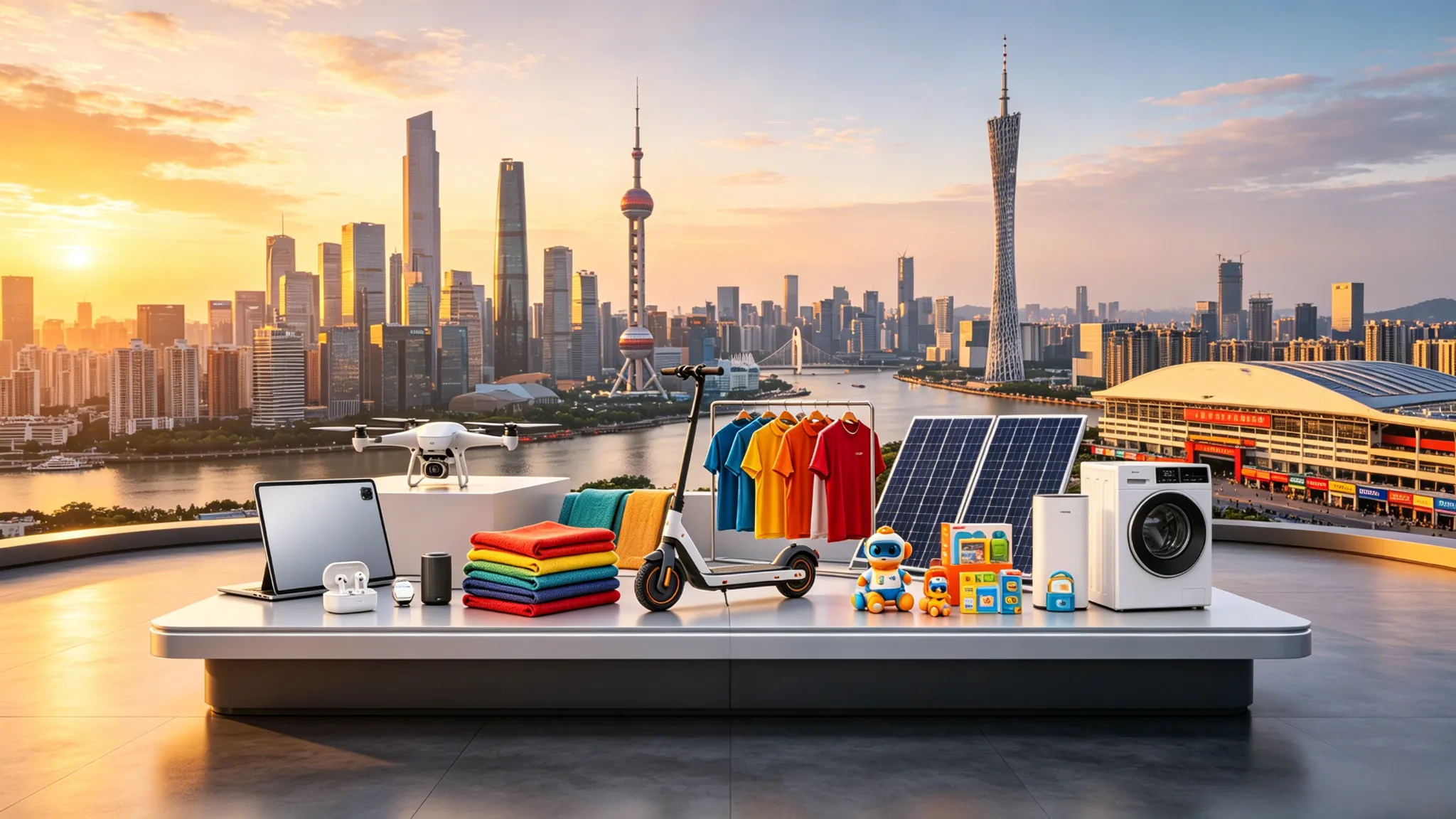
China’s Top Sourcing Cities
Different Chinese cities focus on different product categories, and many have developed famous wholesale markets and procurement hubs where international buyers can directly discover suppliers, compare products, and understand market trends.
| If You Import | Consider These China Regions | Why |
|---|---|---|
| Electronics & smart devices | Shenzhen, Dongguan | Complete electronics supply chain, fast product development |
| Furniture & home products | Foshan, Jiangmen | Large furniture manufacturing clusters |
| Clothing & fashion | Guangzhou, Hangzhou, Ningbo | Strong textile and apparel ecosystem |
| Toys & gifts | Yiwu | Huge supplier networks and flexible orders |
| Machinery & industrial products | Ningbo, Suzhou, Dongguan | Mature industrial manufacturing |
| Packaging products | Shenzhen, Dongguan, Wenzhou | Strong supporting industries |
China’s Popular Sourcing Location
Huaqiangbei Electronics Market
Huaqiangbei, known as “China’s Silicon Valley”, is one of the world’s largest electronics markets. Located in Shenzhen, it brings together thousands of suppliers, manufacturers, and distributors, making it an ideal destination for importers looking to discover new products, compare suppliers, source electronic components, and identify emerging technology trends.
Importers can find:
- Smartphones and accessories
- Wearable devices
- Security products
- Electronic components
- LED products
- Smart hardware
Guangzhou Baima Clothing Market
One of China’s most famous fashion wholesale markets, offering:
- Women’s fashion
- Men’s clothing
- Accessories
- Trend-based products
Yiwu International Trade Market
The Yiwu market is one of the world’s largest wholesale markets, with thousands of suppliers offering millions of small commodity products. Buyers can test multiple products with smaller quantities before investing in larger orders.
Importers can source:
- Jewelry and accessories
- Decorative products
- Toys
- Stationery
- Holiday products
China Trade Fairs: Meeting Suppliers Face-to-Face
Attending trade shows in China is one of the fastest ways to spot trends, compare quality at the source, and negotiate better pricing.
Major China Trade Fairs in 2026
| Trade Fair | Date (2026) | City | Main Industry | Venue |
|---|---|---|---|---|
| China International Furniture Fair (CIFF) | Mar 18–31 | Guangzhou | Furniture, office furniture, outdoor furniture | Canton Fair Complex & PWTC, Guangzhou |
| Auto China (Beijing International Automotive Exhibition) | Apr 24–May 3 | Beijing | Automotive, EV/NEV, smart vehicles, automotive components | CIEC/CIECC, Beijing |
| China Beauty Expo (CBE) | May 12–14 | Shanghai | Cosmetics, skincare, beauty devices, personal care products | Shanghai New International Expo Centre, Shanghai |
| Qingdao International Machine Tool Exhibition | Jun 25–29 | Qingdao | Machine tools, industrial equipment, automation | Qingdao International Expo Center |
| China Ningbo International Auto Parts and Aftermarket Fair (CAPAFAIR) | Aug 12–14 | Ningbo, Zhejiang | Vehicle electronics, auto parts, aftermarket products, new-energy systems | Ningbo International Convention and Exhibition Center |
| China International Optoelectronic Exposition (CIOE) | Sept 9–11 | Shenzhen | Optoelectronics, photonics, optical communication, laser technology | Shenzhen World Exhibition & Convention Center, Shenzhen |
| China International Fair for Trade in Services (CIFTIS) | Sept 9–13 | Beijing | Digital services, information technology, finance, healthcare, education services | Shougang Park, Beijing |
| China International Industry Fair (CIIF) | Oct 12–16 | Shanghai | Industrial automation, machinery, robotics, manufacturing technology | National Exhibition and Convention Center (Shanghai) |
| Canton Fair (China Import & Export Fair) – Autumn Session | Oct 15–Nov 4) | Guangzhou | Electronics, household appliances, toys, mother & baby products, medical products, textiles, and more | Canton Fair Complex, Guangzhou |
| Yiwu International Commodities Fair | Oct 21–24 | Yiwu, Zhejiang | Small commodities, gifts, accessories, household products, seasonal goods | Yiwu International Expo Center, Yiwu |
| China International Medical Equipment Fair (CMEF) | Oct 21–24 | Beijing | Medical imaging, robotics, in vitro diagnostics, elderly care solutions, healthcare equipment | CIECC, Beijing |
Make the Most of Trade Shows
- Register early and prepare required documents
Complete visitor registration before arrival, prepare your passport/ID information, and check the fair’s entry requirements to avoid delays at the venue. - Research exhibitors and shortlist suppliers in advance
Review the exhibitor list, identify relevant suppliers, note their booth numbers, and prepare questions about products, pricing, MOQ, certifications, and customization options. - Verify whether suppliers are manufacturers or trading companies
Ask about factory ownership, production locations, main products, and export experience to understand their actual capabilities. - Arrange factory visits after the fair
Visit promising suppliers to verify production facilities, equipment, quality management systems, and production capacity before placing large orders.
China’s Online Supplier Platforms
Online supplier platforms are often the first step for U.S. importers looking for Chinese suppliers and are valuable for supplier discovery and market research.
China’s Major B2B Platforms
| Platform | Language | Key Strength | Main Weakness |
|---|---|---|---|
| Alibaba.com | English | Largest global B2B platform; Trade Assurance buyer protection; wide supplier selection; | Higher prices due to international marketing costs; need to verify manufacturer vs. trader status |
| Made-in-China.com | English | Strong focus on verified manufacturers; detailed company verification and VR factory tours; good for industrial/technical products | Smaller supplier catalog compared to Alibaba |
| 1688.com | Chinese (only) | Lowest factory-direct pricing; access to real manufacturers; massive catalog across all categories | Chinese-only interface; requires agent for international buyers; no export documentation support; domestic payment systems only |
| Global Sources | English | Well-regarded for electronics and consumer tech; | Smaller supplier base; more niche focus |
China’s Popular B2C Platforms
Many Chinese suppliers and brands operate online stores on popular B2C platforms. These platforms serve China’s massive consumer market and offer highly competitive retail prices. For U.S. importers, these platforms are valuable not only for purchasing products but also for discovering new product trends.
| Platform | Best For | Advantages | Challenges |
|---|---|---|---|
| Pinduoduo | Low-cost goods | Competitive retail pricing, useful for identifying potential trends | Mostly consumer-focused; not designed for bulk international purchasing; limited export support |
| Taobao Tmall | Fashion, lifestyle products, niche products, creative items | Huge product variety, strong trend discovery, useful for understanding Chinese consumer preferences | |
| Douyin (China TikTok) | Innovative products, lifestyle trends | Shows real-time consumer trends and products gaining popularity quickly | |
| JD (Jingdong) | Electronics, appliances, branded products | Strong reputation for product quality |
Challenges of Using Online Sourcing Platforms
When sourcing with online platforms, many importers are facing the following challenges:
- Language barriers and different time zones when communicating with Chinese suppliers
- Managing multiple suppliers from different regions
- Different suppliers have different delivery schedules
- Small orders create high shipping costs
With China-based warehouse operations, ContainerFromChina helps U.S. importers:
- Coordinate supplier communication
- Receive goods from multiple suppliers at our China warehouse
- Assist with cargo inspection and packaging checks
- Consolidate shipments to reduce freight costs
Choose Factory or Trading Company When Importing from China
Many buyers assume that factories are always the better choice because they offer lower prices, but the right option depends on your product type, order volume, customization needs, and sourcing experience.
Factory vs. Trading Company: Key Differences
| Factor | Factory | Trading Company |
|---|---|---|
| Product Price | Usually lower because you buy directly from the manufacturer | Usually higher due to service fees and supplier margins |
| Product Range | Usually specializes in a limited number of products | Can offer products from multiple factories and categories |
| Customization (OEM/ODM) | Stronger capability for product development and modifications | Depends on the factory network they work with |
| Minimum Order Quantity (MOQ) | Often requires larger orders due to production efficiency | More flexible and may support smaller quantities |
| Communication | May require more technical communication and product knowledge | Usually easier for overseas buyers due to export experience |
| Quality Control | Direct access to production process | Quality depends on the factories they manage |
| Supplier Verification | Requires checking factory capability and ownership | Requires verifying both the trading company and manufacturing partners |
| Product Sourcing Efficiency | Best when you already know exactly what you need | Better when sourcing multiple products from different suppliers |
Factory or Trading Company: Which One Is Better for U.S. Importers?
| Importer Situation | Recommended Choice |
|---|---|
| Testing a new product | Trading company or small factory |
| Small order quantity | Trading company or flexible manufacturer |
| Private-label product | Factory with OEM/ODM capability |
| Large recurring orders | Direct factory relationship |
| Multiple product categories | Trading company |
| Technical or industrial products | Specialized factory |
Verify a Chinese Supplier Before Paying
The lowest quotation does not always represent the best supplier. Reliable importing requires evaluating supplier qualifications, confirming product quality, and verifying production capabilities before making a large investment.

Check Supplier Qualifications
Verify basic information:
- Company registration information
- Years in business
- Factory location
- Export experience
- Production capacity
- Number of production lines
- Main manufacturing equipment
Request Samples Before Mass Production
Never place a large order based only on product photos or supplier descriptions.
Requesting samples allows importers to evaluate:
- Dimensions and specifications
- Product performance
- Color and appearance
- Packaging
- Labels and markings
Conduct Factory Audits for High-Value Orders
For large orders or long-term cooperation, a factory audit provides deeper insight into the supplier’s actual capabilities.
A factory audit can verify:
- Whether the supplier owns a real production facility
- Production capacity
- Manufacturing processes
- Quality management systems
- Worker and equipment conditions
- Warehouse and inventory management
Understand China–U.S. Customs Requirements and Compliance Rules
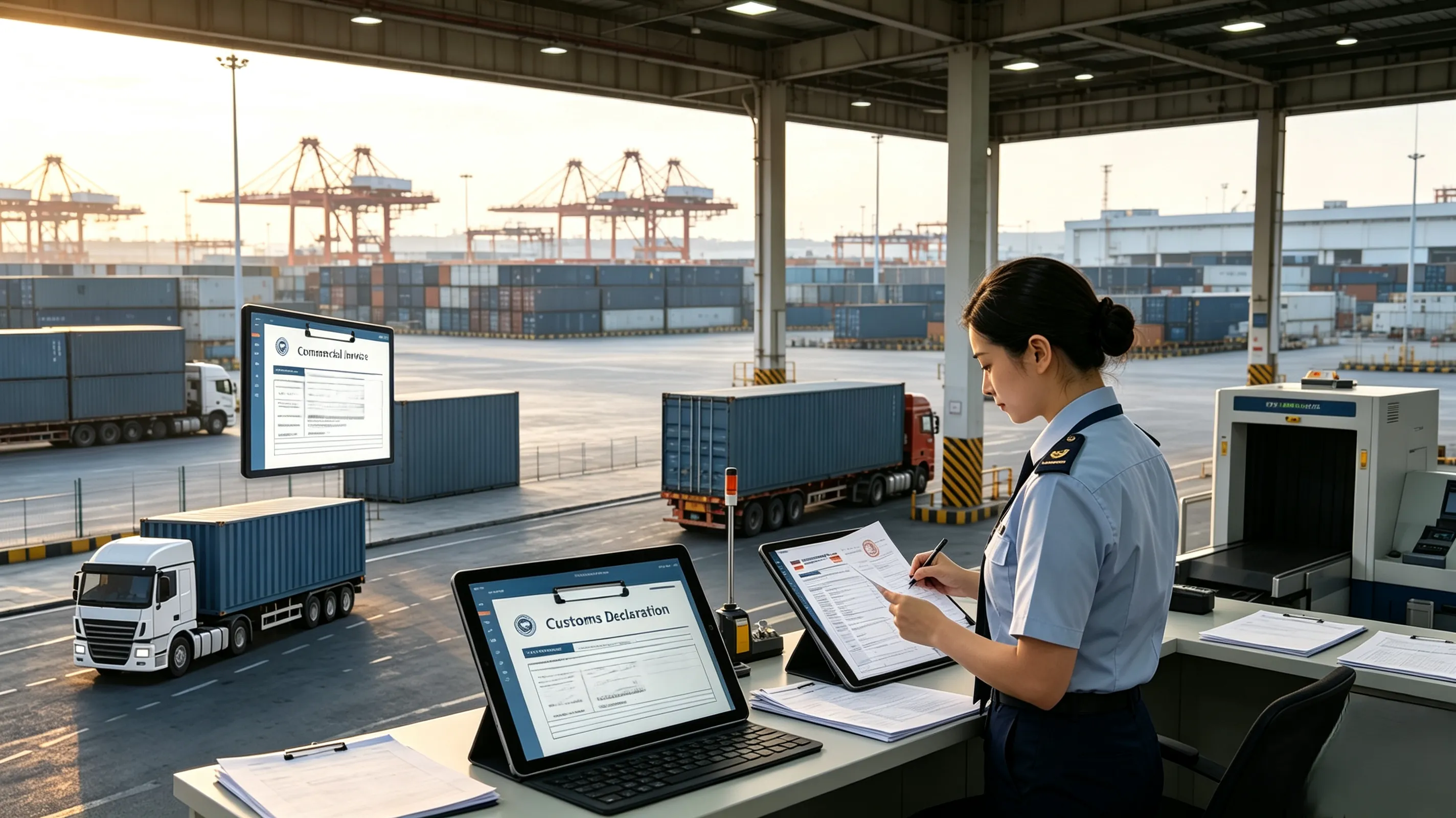
A product that does not meet U.S. import requirements can face customs delays, additional costs, rejected shipments, or even penalties. Before production begins, U.S. importers should understand their product classification, required certifications, labeling obligations, and customs documentation.
Identify Your Product Category and Required Certification
| Product Category | Possible Requirements |
|---|---|
| Electronics | FCC certification, testing reports, battery documentation |
| Medical devices | FDA registration, device listing, technical documents |
| Cosmetics | FDA cosmetic requirements, ingredient compliance, labeling |
| Food products | FDA facility registration, import requirements, labeling |
| Toys and children’s products | CPSIA requirements, safety testing |
| Textiles and apparel | Fiber labeling, country-of-origin marking |
Understand Customs Classification
Every imported product needs the correct HS code. The HS code determines:
- Applicable import duties
- Tariff rates
- Required customs documentation
- Whether additional regulations apply
Incorrect classification can result in:
- Incorrect duty payments
- Customs delays
- Additional inspections
- Potential penalties
Prepare Essential Import Documents
Common import documents include:
| Document | Purpose |
|---|---|
| Commercial Invoice | Declares product value, description, and transaction details |
| Packing List | Provides shipment quantity, weight, and packaging details |
| Bill of Lading / Air Waybill | Transportation document issued by the carrier |
| Certificate of Origin | Confirms where products are manufactured when required |
| ISF Filing (Ocean Freight) | Required for ocean shipments entering the U.S.; must be submitted at least 24 hours before loading |
Common Compliance Mistakes Made by U.S. Importers
- Incorrect HS code classification
- Not understanding product-specific certification requirements
- Assuming the supplier handles all import compliance
- Incorrect or incomplete shipping documents
- Ignoring labeling and packaging requirements
How ContainerFromChina Helps Reduce Compliance Risks?
Our professional customs and logistics team helps importers by:
- Understanding product-specific import requirements
We identify key compliance considerations based on product categories, helping avoid issues caused by missing certifications. - Preparing accurate customs documentation
With years of China–USA shipping experience, our team proactively identifies potential documentation issues, ensuring all paperwork is accurate, complete, and submitted on time to support smooth customs clearance. - Coordinating with suppliers before shipment
We communicate with Chinese suppliers to collect necessary documents, confirm cargo details, and ensure shipments are properly prepared before departure.
Choose the Right Incoterms When Importing from China
Incoterms (International Commercial Terms) define the responsibilities between buyers and sellers during international transactions.
| Incoterm | Supplier Responsibility | Importer Responsibility | Advantages | Potential Risks |
|---|---|---|---|---|
| EXW (Ex Works) | Makes goods available at the factory | Handles pickup, export, shipping, customs, and delivery | Lowest supplier responsibility; gives buyers maximum control | Beginners may struggle with China export procedures and local logistics |
| FOB (Free on Board) | Handles inland transportation and export clearance; delivers goods to port | Controls ocean freight, insurance, import clearance, and final delivery | Most common choice for experienced importers; good balance of control and responsibility | Buyer needs to manage international shipping arrangements |
| CIF (Cost, Insurance and Freight) | Arranges freight and insurance to destination port | Handles import clearance and inland delivery | Convenient for buyers who prefer supplier-arranged shipping | Supplier may choose shipping options that are not always the most cost-effective |
| DDP (Delivered Duty Paid) | Handles shipping, customs clearance, duties, and delivery to buyer | Receives goods with minimal involvement | Simple option for beginners and small shipments | Less control over shipping route, customs process, and actual costs |
How ContainerFromChina helps importers under different incoterms
| Incoterm | How ContainerFromChina Adds Value |
|---|---|
| EXW | Our China warehouse enables us to collect products from multiple factories and consolidate shipments. We coordinate supplier pickups, cargo receiving, inspection arrangements, export documentation, and international shipping to simplify EXW transactions. |
| FOB | As a China–U.S. specialist, we help importers compare shipping options, secure competitive freight solutions, and coordinate directly with Chinese suppliers to ensure cargo is delivered on schedule. |
| CIF | We help buyers avoid overpaying and maintain better control over their supply chain by reviewing logistics arrangements and offering alternative freight options. |
| DDP | Our DDP solutions provide a complete door-to-door service managed by our professional China–U.S. logistics team. We handle supplier coordination, China warehouse consolidation, international transportation, customs clearance coordination, duties/taxes arrangements, and U.S. delivery—giving importers a simpler and more predictable importing experience. |
China Import Payment Methods: How to Pay Chinese Suppliers Safely
Choosing the right payment method can reduce financial risks, especially when working with a new supplier.
| Payment Method | How It Works | Best For | Advantages | Potential Risks |
|---|---|---|---|---|
| T/T | Buyer transfers money directly to the supplier’s bank account, usually with a deposit before production and balance before shipment | Most common method for international trade | Fast, simple, widely accepted by Chinese suppliers | Buyer has limited protection if supplier fails to deliver |
| Letter of Credit (L/C) | A bank guarantees payment to the supplier after required documents and conditions are met | Large orders, high-value transactions, new supplier relationships | Provides stronger protection for both buyer and seller | More paperwork, bank fees, and stricter requirements |
| Alibaba Trade Assurance | Payment is made through Alibaba and eligible orders receive protection based on agreed terms | Small and medium-sized buyers using Alibaba | Helps protect buyers against quality issues, shipment delays, and order problems | Only applies to eligible Alibaba transactions; |
| PayPal | Buyer pays supplier through PayPal’s payment system | Samples, small orders, product testing | Fast payment, buyer-friendly protection, convenient for small transactions | Higher transaction fees; not suitable for large commercial orders |
Import from China to USA Shipping Methods: Compare Express, Air Freight, and Ocean Freight
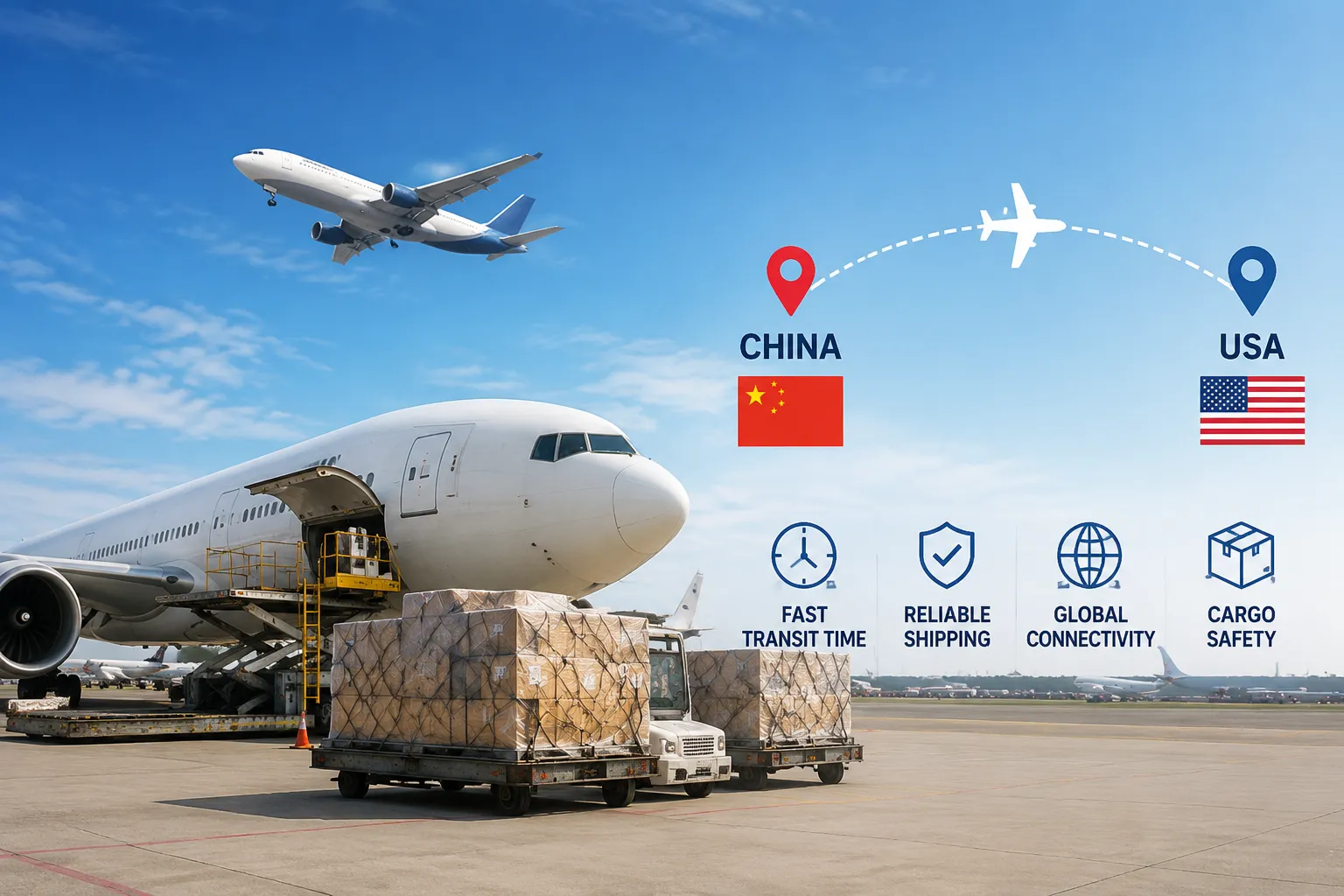
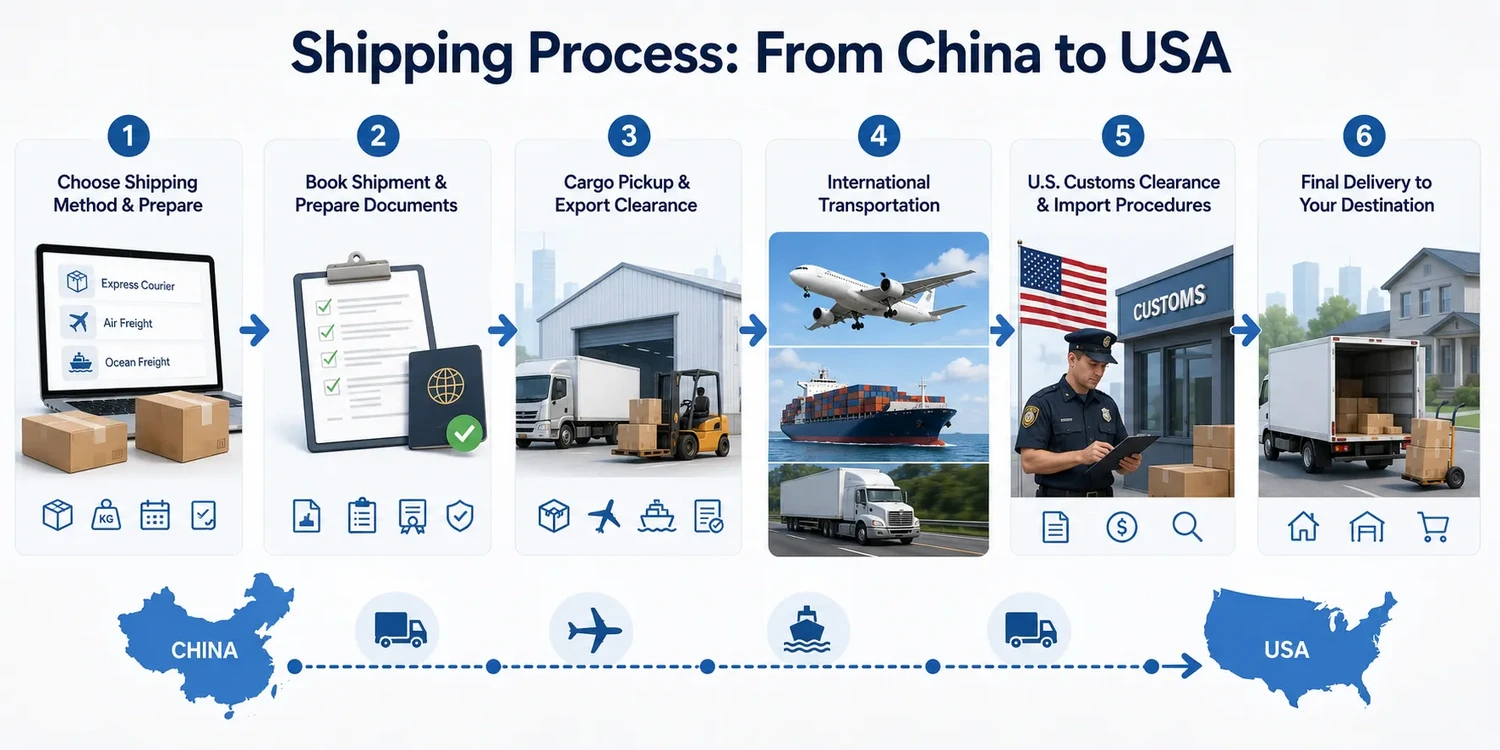
The right shipping method depends on your order size, product value, delivery urgency, and inventory strategy. Small shipments usually require faster solutions such as express or air freight, while larger commercial orders are usually more cost-effective through ocean freight.
Express vs. Air Freight
| Factor | Express Courier | Air Freight |
|---|---|---|
| Best For | Samples, small parcels, urgent shipments | Medium-sized commercial shipments |
| Shipment Size | Usually under 100 kg | 100 kg+ |
| Transit Time | 2–5 days | 3–7 days |
| Delivery | Door-to-door service included | Airport-to-airport importers have to purchase additional services: customs clearance terminal handling final-mile delivery |
| Cost | Higher | Lower for larger shipments |
| Best Choice | Speed and convenience | Balance between cost and speed |
Ocean Freight: Choosing Between LCL and FCL for Larger Imports from China
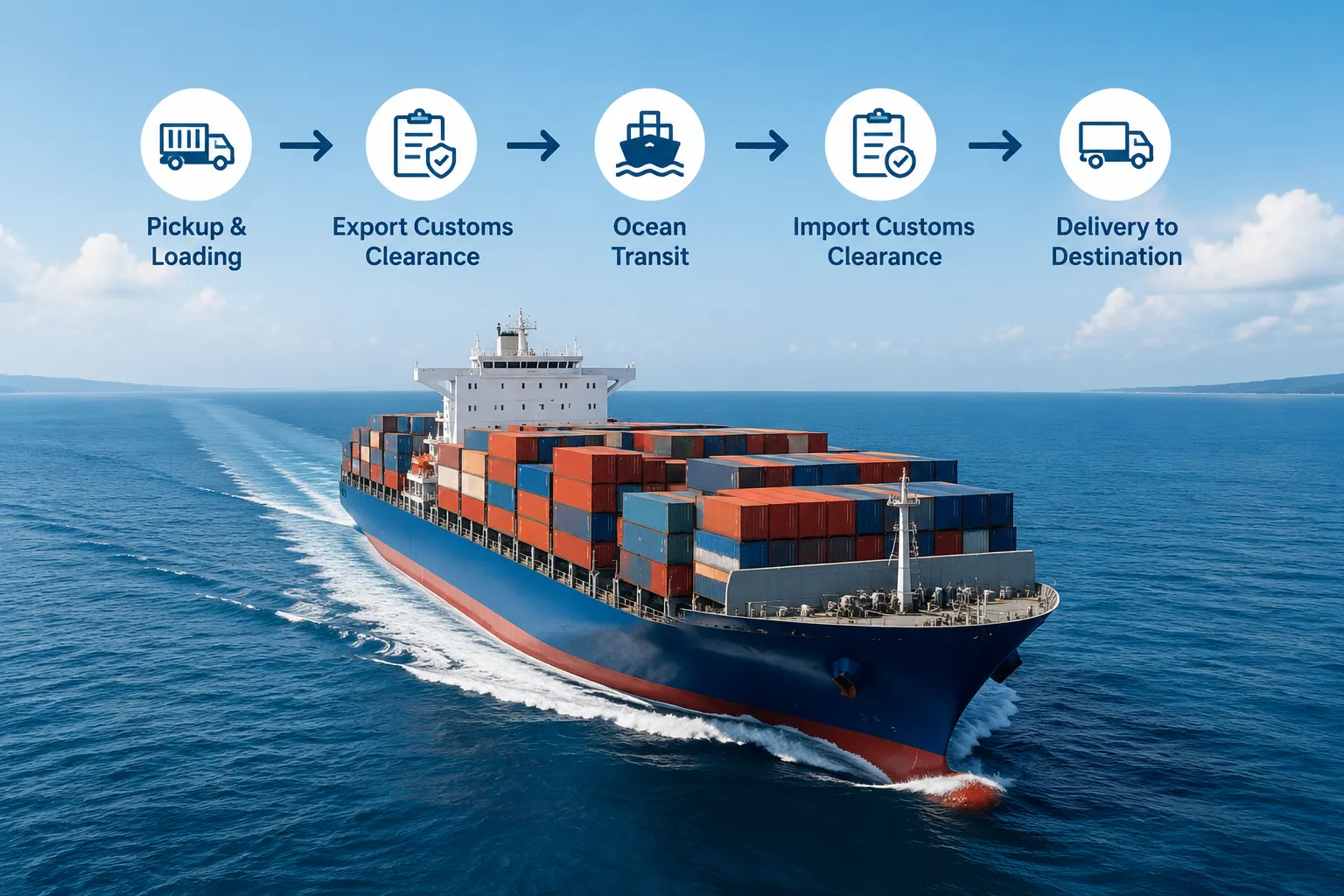
For most commercial importers, ocean freight is the most economical transportation method from China to the U.S. The main decision is whether to choose LCL (Less than Container Load) or FCL (Full Container Load).
What are FCL and LCL
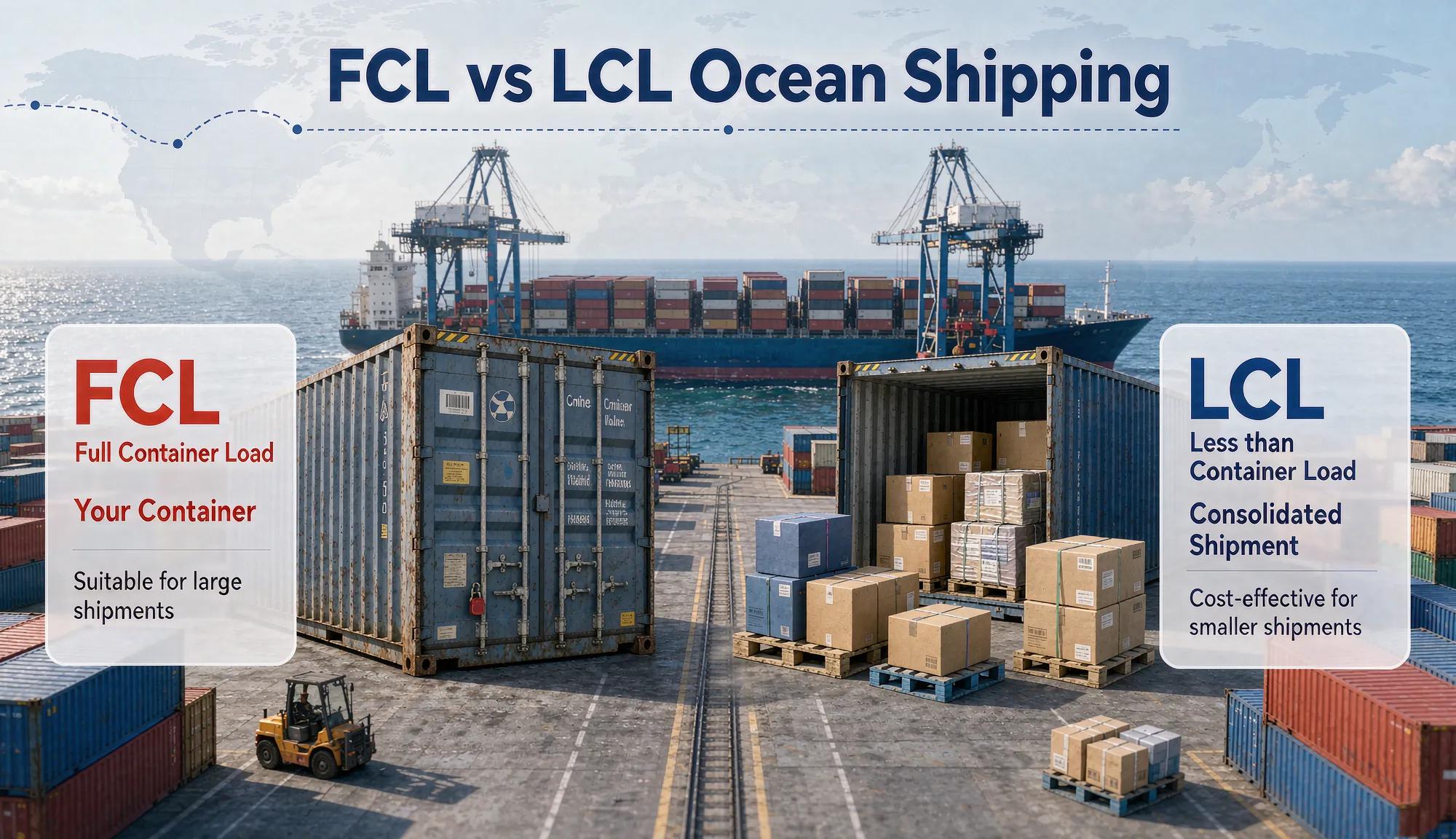
LCL (Less Than Container Load): LCL means your shipment does not require a full container, so your goods share container space with cargo from other importers. Your goods need to be consolidated with shipments from multiple buyers into one container before export and deconsolidated after arrival at the destination.
FCL (Full Container Load): FCL means one importer uses an entire container exclusively for their shipment. Your goods are loaded into a dedicated container at the supplier’s factory or a warehouse, sealed, and transported directly to the destination port.
Common FCL Container Sizes
| Container Type | Approximate Capacity |
|---|---|
| 20’GP (20-foot General Purpose) | Around 28–33 CBM |
| 40’GP (40-foot General Purpose) | Around 56–67 CBM |
| 40’HC (40-foot High Cube) | Around 68–76 CBM |
FCL vs. LCL: Detailed Comparison
| Comparison Factor | FCL | LCL |
|---|---|---|
| Definition | One importer uses the entire container | Multiple importers share one container |
| Best For | Large-volume shipments | Small and medium shipments |
| Typical Volume | Usually 15+ CBM | Usually 1–15 CBM |
| Cost Structure | Pay for the container | Pay based on cargo volume/weight (whichever is higher) |
| Cost Efficiency | Lower cost per unit for large shipments | More economical for smaller shipments |
| Cargo Handling | Less handling | More handling due to consolidation |
| Damage Risk | Lower | Slightly higher |
| Transit Time | Usually faster processing | May require additional consolidation time |
| Flexibility | Lower | Higher |
How to Choose a Reliable China-U.S. Freight Forwarder
Finding profitable products in China is only the first step of a successful import business. The real challenge begins when your goods need to move from multiple factories to your warehouse while controlling costs, meeting delivery deadlines, and avoiding unexpected problems.
When selecting a freight forwarder for China–USA shipping, importers should evaluate several key factors:
1. Experience in China–USA Shipping Routes and Strong Carrier Networks
Choosing a freight forwarder with strong route expertise and carrier connections can help importers achieve more stable shipping schedules, competitive freight costs, and fewer supply chain disruptions.
Why choose ContainerFromChina?
- 10+ years of China–USA shipping experience with proven expertise in major trade routes
- Direct, long-term contracts with top-tier shipping lines such as Matson, ZIM, and Evergreen
- Guaranteed container space allocation even during capacity crunches
- Competitive, locked-in pricing that protects you from spot-rate spikes
2. All-Inclusive, Transparent Pricing—No Surprises, No Budget Blowouts
A complete quotation allows you to estimate the real cost of importing, including transportation, customs-related expenses, and delivery costs, helping you protect your profit margins and plan your budget more accurately.
A professional quotation should clearly explain:
- Ocean freight, air freight, or express shipping costs
- Origin charges in China
- Documentation fees
- Customs clearance fees
- Import duties and taxes (if applicable)
- Destination handling charges
- Final delivery costs
Why choose ContainerFromChina?
- We offer a single, upfront all-inclusive quote that covers every service fee from supplier pickup to U.S. warehouse delivery.
- No temporary price increases—even during rate volatility. Your budget remains fully controllable from day one.
3. Real-time Communication, Tracking, and Customer Support
A professional freight forwarder should provide transparent shipment tracking, proactive updates, and a dedicated support team that keeps you informed throughout the entire shipping process. Instead of waiting for problems to occur.
Why choose ContainerFromChina?
- Assign every customer a dedicated 1-on-1 account manager who understands your business requirements
- Real-time shipment updates and transparent tracking information
- Proactive communication about customs issues and schedule changes
4. Specialized Customs Compliance Support
A freight forwarder’s customs compliance capability directly determines whether your cargo clears smoothly or spends weeks in customs holding, accumulating demurrage, storage fees, and missed sales.
A reliable freight forwarder should support:
- HS code verification
- Import documentation preparation
- Customs clearance coordination
- Tariff and compliance guidance
Why choose ContainerFromChina?
- Special cargo handling expertise – We don’t treat sensitive cargo as “difficult shipments we occasionally handle.” We have years of experience across all major product categories, including battery-powered products, magnetic products, cosmetics, medical devices, liquids, etc.
- Pre-shipment compliance review – We catch 97% of documentation, labeling, and packaging issues before cargo leaves the factory—so you avoid costly carrier rejections, customs holds, and demurrage fees.
5. The Ability to Handle Different Cargo Types and Business Needs
As your import business grows, your logistics requirements become more complex. Different products require different handling methods, whether you are shipping oversized equipment, fragile goods, high-volume inventory, or Amazon FBA shipments.
Choosing a freight forwarder with the experience and flexibility to adapt to your cargo characteristics, shipment volume, and business objectives is essential for reducing risks and ensuring smooth delivery.
Why choose ContainerFromChina?
- Experienced in managing oversized, irregular, and special-requirement cargo with customized transportation solutions covering cargo assessment, specialized container selection, loading and securement planning, and documentation support to ensure safe and compliant transportation from China to the USA.
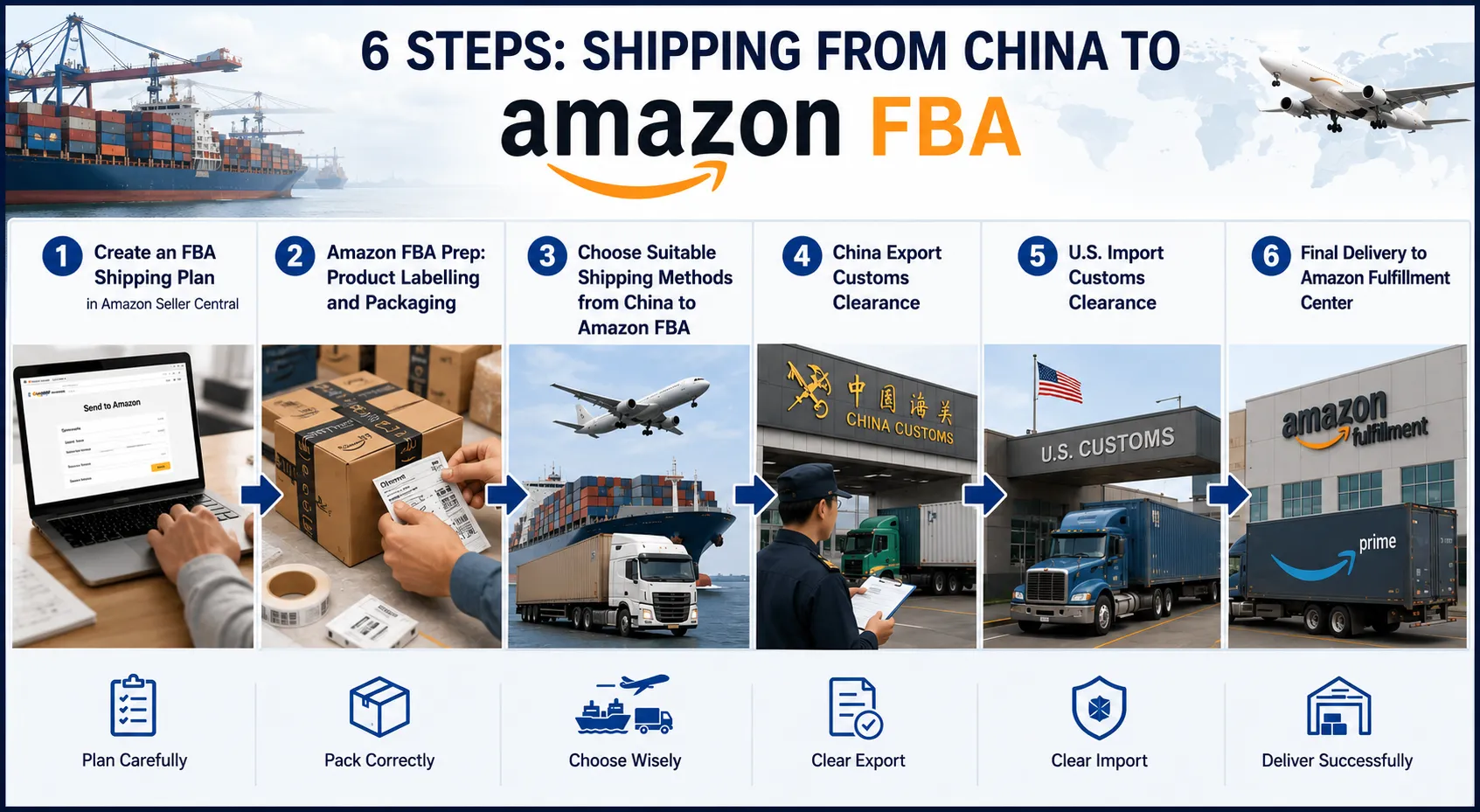
- Full-service FBA logistics support covering supplier pickup, China warehouse consolidation, labeling, packaging preparation, customs coordination, appointment scheduling, and compliant delivery to Amazon warehouses.
6. End-to-End China–U.S. Logistics Network
A reliable China–U.S. freight forwarder should have operational capabilities in both China and the United States. Managing international shipments involves coordinating factory pickup, export procedures, ocean transportation, U.S. port handling, warehousing, trucking, and final delivery. A forwarder with resources on both sides can provide better control, faster response, and a more reliable door-to-door shipping experience.
Why choose ContainerFromChina?
- A comprehensive China–USA logistics network backed by self-owned warehouses and trucking resources in China and the United States, ensuring efficient cargo handling and reliable final-mile delivery from U.S. ports to stores, distribution centers, FBA warehouses, and B2C addresses.
- Our U.S. operations cover major logistics hubs such as Los Angeles, New York, Chicago, Houston, Philadelphia, Boston, and Atlanta
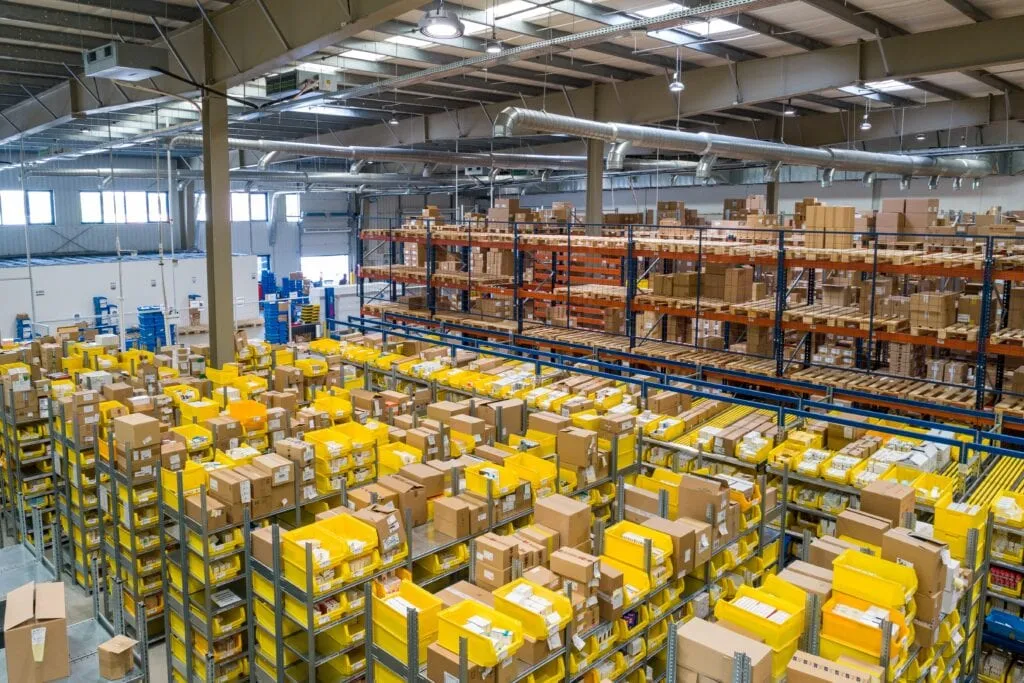
- Integrated warehousing and delivery services—storage, pick-and-pack, palletization, cross-docking, and dispatch—all under one roof, eliminating handoff delays between separate providers.
Common Pitfalls When Importing from China to USA (And How to Avoid Them)
Importing goods from China to USA offers great profit potential, but many new importers encounter avoidable risks that hurt margins and delay operations. Understanding these common pitfalls is essential for anyone learning how to import from China smoothly and compliantly.
Hidden Costs That Can Eat Into Your Profits
Most beginners only focus on product price and shipping costs when importing from China to USA, but there are often additional fees that reduce profit margins. Common extra expenses include U.S. customs processing fees, harbor maintenance fees, additional Section 301 tariffs, and port storage charges. Besides, bank currency conversion fees and third-party inspection or brokerage service fees also add up unexpectedly.
How to avoid: Calculate full landed costs before placing orders. Cooperate with reliable forwarders to get all-inclusive quotes and check updated tariff rules via official U.S. customs databases to avoid budget overruns.
Quality Control Issues: How to Minimize Risk
Quality inconsistency is a top issue when you import goods from China. Some factories cut material or workmanship costs for higher profits, resulting in defective products. Even approved samples cannot guarantee consistent bulk order quality. Meanwhile, unqualified packaging and incorrect U.S. standard labels may lead to customs rejection.
How to avoid: Confirm clear quality specifications with suppliers in advance. Conduct pre-production sample confirmation and arrange third-party pre-shipment inspections. Add quality penalty clauses in contracts to restrain factory irregularities.
Shipping Delays and Customs Hold Scenarios
Shipping delays usually occur due to three main factors:
- Production delays
Factory production backlogs during peak seasons can extend manufacturing lead times. - Port congestion
High shipping demand at major ports such as Shenzhen or Los Angeles may slow down cargo movement. - Documentation issues
Missing or incorrect documents (such as invoices or HS codes) can trigger customs inspections and delay clearance.
How to avoid: Reserve 2-4 weeks of buffer time for all orders and extend the buffer period during major holidays or peak seasons. Double-check all clearance documents including invoices and certification. Work with experienced agents to ensure compliant and fast customs clearance.
Intellectual Property and Trademark Risks
IP infringement is a high-risk problem when the US importing from China. Unprotected custom designs may be copied by factories and sold to competitors. Unintentional import of patent or trademark-infringing products will lead to goods seizure and legal penalties in the US.
How to avoid: Register your trademarks and patents in the US and China. Sign NDAs with cooperative factories and verify product IP compliance before mass production.
Importing from China Around Festivals
Chinese holidays can significantly affect manufacturing schedules, supplier response times, and international shipping capacity.
How to avoid: The pitfall isn’t the festival itself — it’s treating it as a calendar event instead of a supply chain stress test. Build festival resilience into your annual sourcing rhythm, not react to it as an exception.
The table below shows the key Chinese holidays in 2026 and the recommended timing for placing orders.
| Chinese Festival | Official Holiday Period (2026) | Business Impact Period for Importers | Impact | Recommended Action |
|---|---|---|---|---|
| Chinese New Year (Spring Festival) | Feb 15–23, 2026 (9 days) | Usually late January to early March | Highest impact | Place orders 8–12 weeks early. |
| Labor Day Holiday (May Day) | May 1–5, 2026 (5 days) | Around late April to early May | Medium impact | Place important orders 3–4 weeks early |
| Mid-Autumn Festival | Sep 25–27, 2026 (3 days) | Usually late September to mid-October | High impact | Place orders 6–8 weeks early. |
| National Day Golden Week | Oct 1–7, 2026 (7 days) | Usually late September to mid-October | High impact | Place orders 6–8 weeks early. |
Challenges for China-U.S. Shipping influenced by Chinese holidays
- limited carrier capacity
- higher freight rates
- port congestion
- shipment rollovers
How ContainerFromChina helps during holiday peak seasons
ContainerFromChina helps importers prepare ahead and keep shipments on schedule through:
- Coordinating supplier readiness before factory shutdowns
We proactively remind suppliers of critical production and shipping deadlines, arrange timely pickups before holiday closures. - Securing shipping space before the market gets tight
ContainerFromChina maintains real-time visibility into market conditions, including capacity availability and schedule changes. This allows us to plan your bookings earlier and avoid unnecessary peak-season premiums. - Adjust Quickly When Production or Shipping Schedules Change
We provide multi-carrier contingency planning and alternative routing options to reduce the risk of space shortages and shipment rollovers.
Frequently Asked Questions
Where can I find reliable Chinese suppliers?
U.S. importers can find suppliers through:
- B2B platforms such as Alibaba, Made-in-China.com, Global Sources, and 1688
- China trade fairs such as Canton Fair
- Manufacturing hubs such as Shenzhen, Guangzhou, Foshan, and Yiwu
However, finding a supplier is only the first step. Importers should verify factory capabilities, request samples, check certifications, and evaluate production capacity before placing large orders.
Should I buy directly from a factory or work with a trading company?
It depends on your order volume, product type, customization needs, and sourcing experience.
Factories are usually better for:
- Large recurring orders
- Private-label products
- OEM/ODM projects
Trading companies may be better for:
- Small orders
- Multiple product categories
- Importers who need easier communication and supplier coordination
How can I avoid customs problems when importing from China?
To reduce customs risks, importers should:
- Confirm the correct HS code
- Understand product-specific certification requirements
- Prepare accurate shipping documents
- Ensure proper labeling and packaging compliance
ContainerFromChina helps identify potential compliance issues before shipment by reviewing documentation, coordinating with suppliers, and ensuring cargo is properly prepared before departure.
What is the best shipping method when importing from China?
The best shipping method depends on your shipment size, product value, urgency, and inventory needs:
- Express courier: Best for samples, small parcels, and urgent shipments
- Air freight: Suitable for medium-sized commercial shipments requiring faster delivery
- Ocean freight: The most cost-effective option for larger commercial shipments
Why should I use a China–US freight forwarder instead of arranging shipping myself?
Managing China imports involves more than transportation. Importers need to coordinate suppliers, warehouse receiving, documentation, customs clearance, ocean or air transportation, and final delivery.
An experienced China–US freight forwarder can help reduce delays, control costs, manage compliance risks, and provide better visibility throughout the shipment process.